- Roysningur
- Aaveq
- Rostungur
- Hvalross
- Morša
- Hvalros
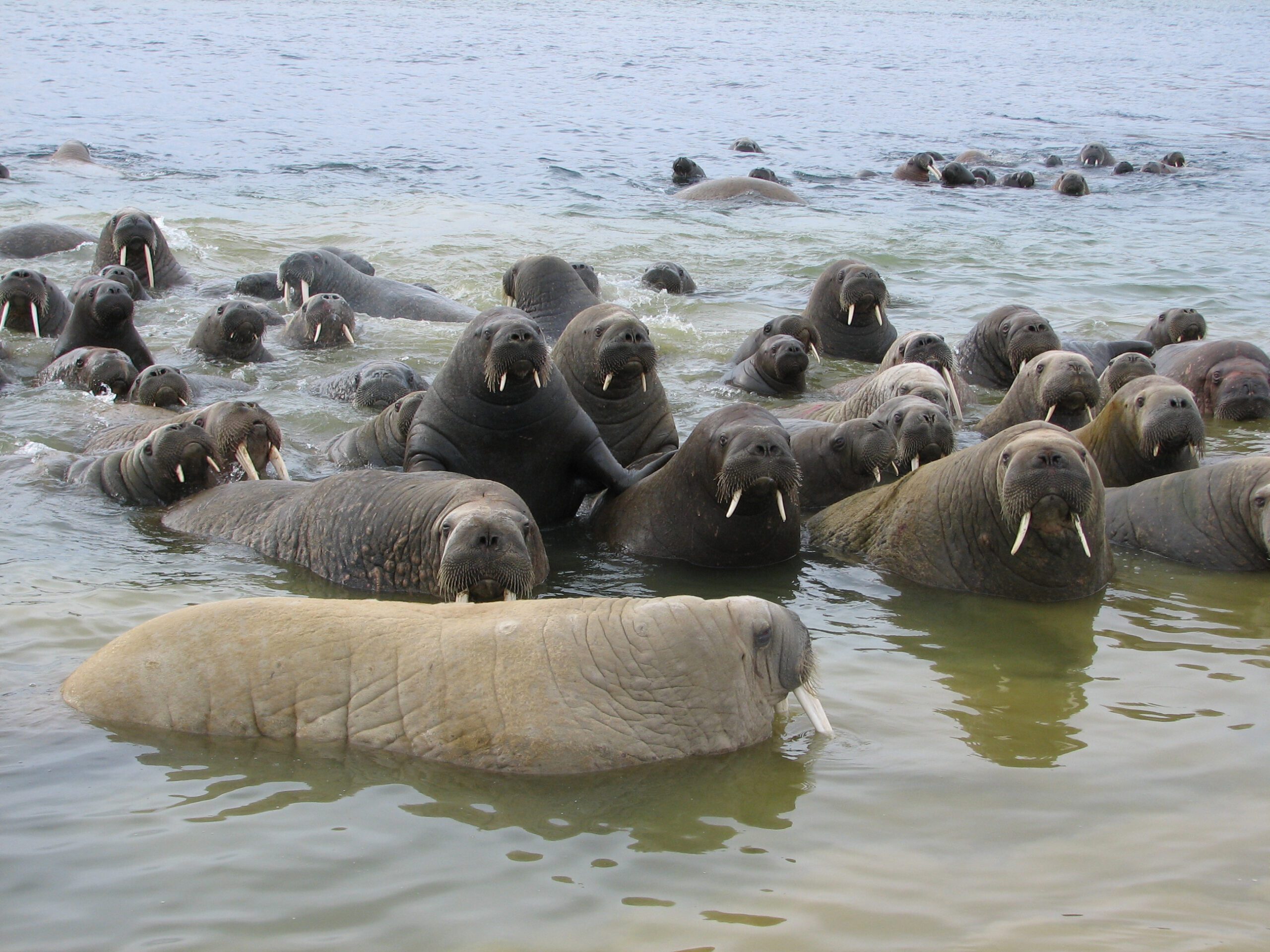
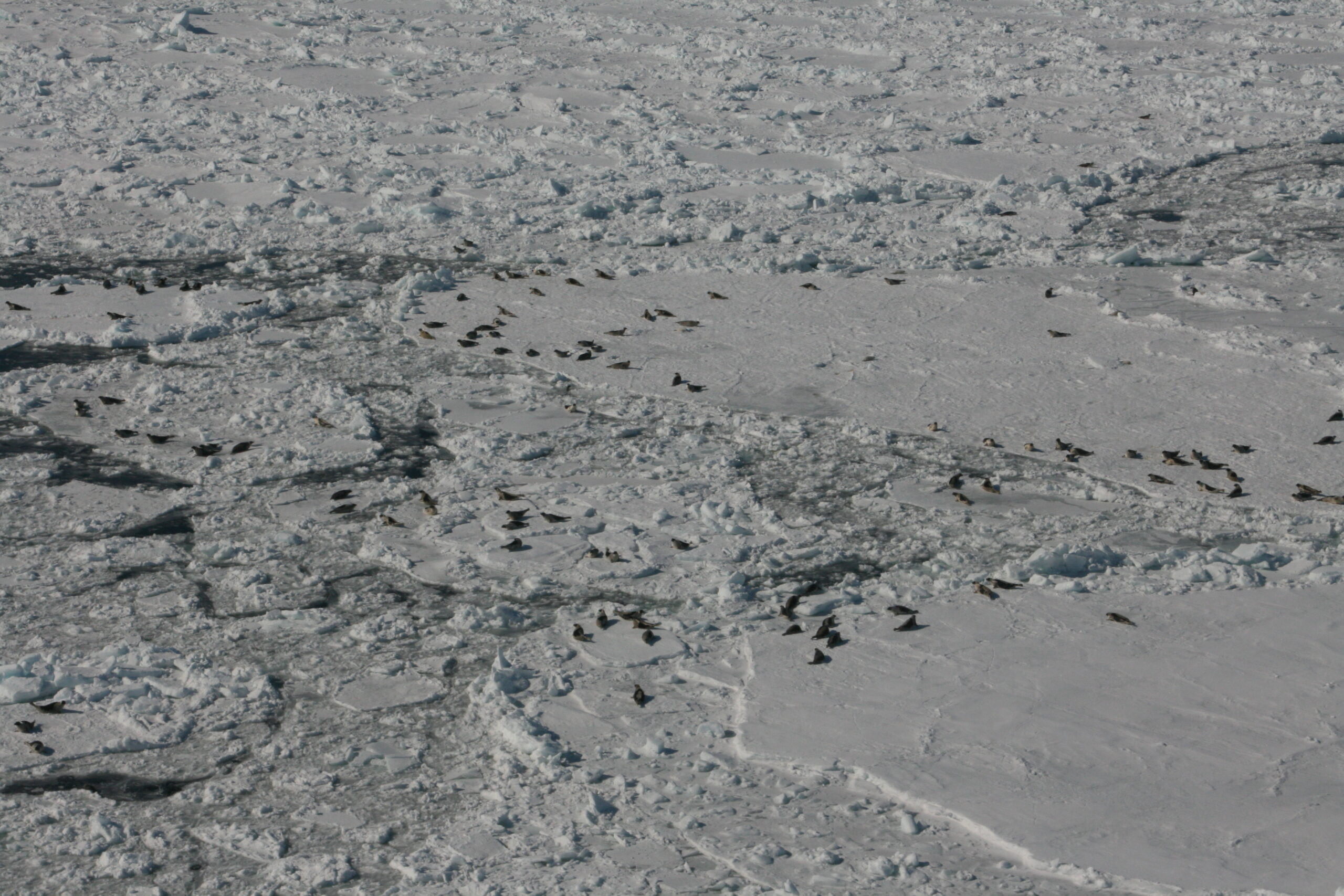
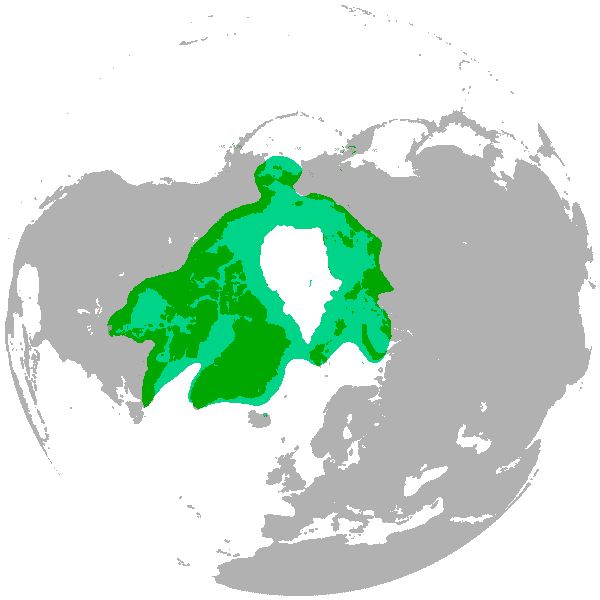
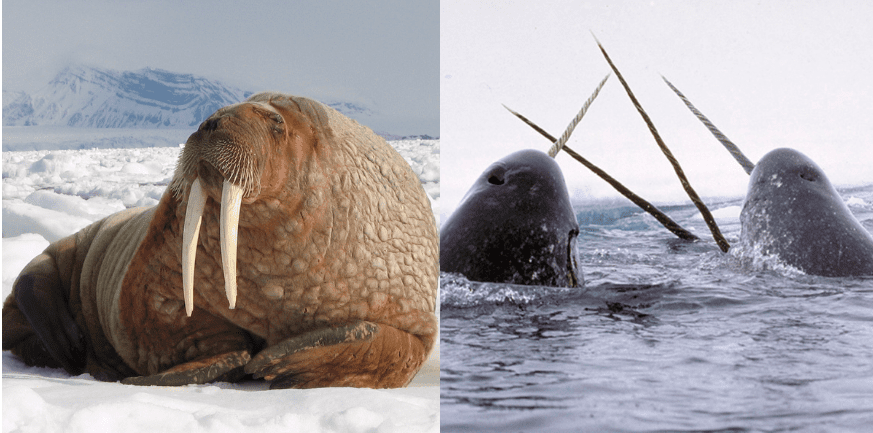
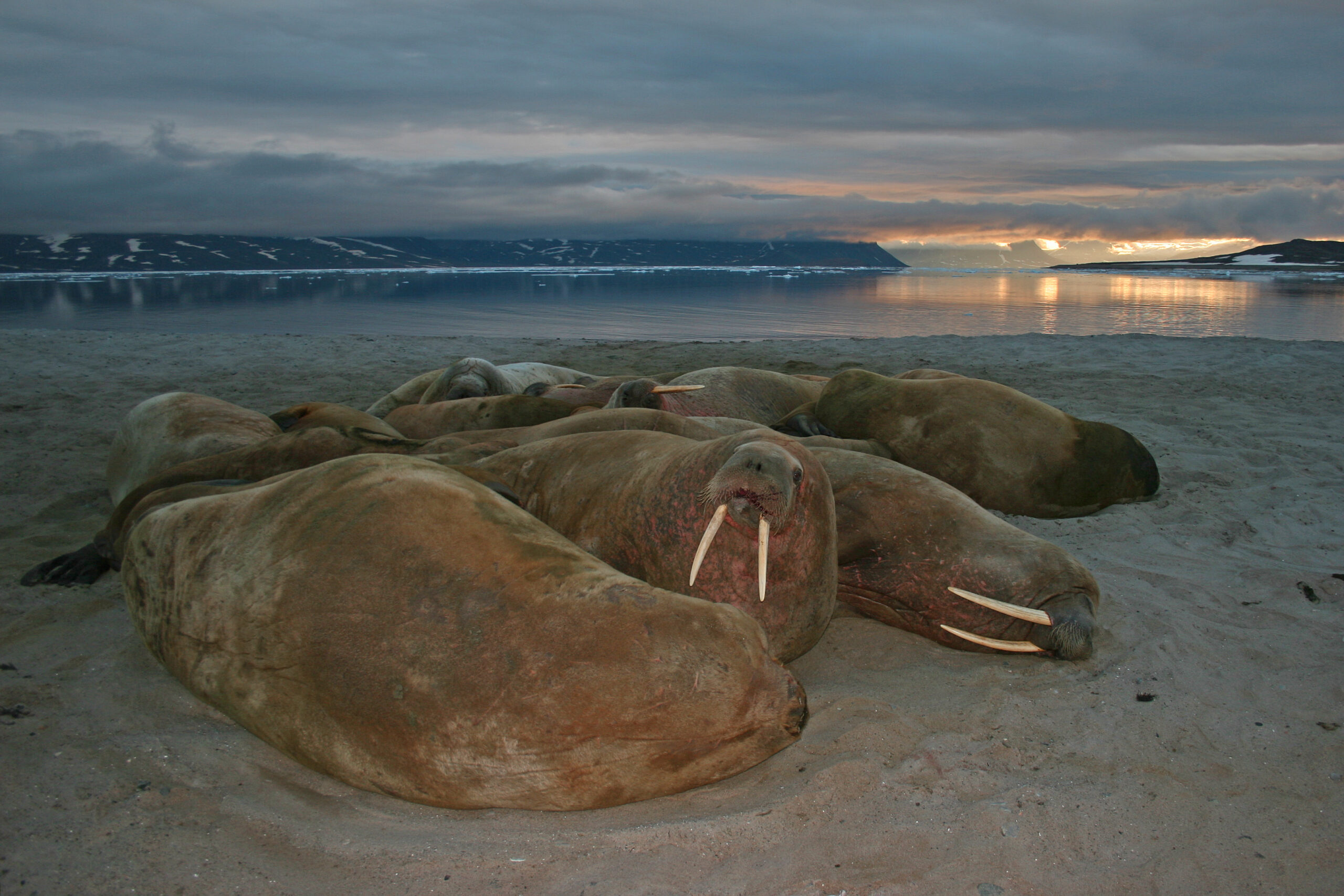
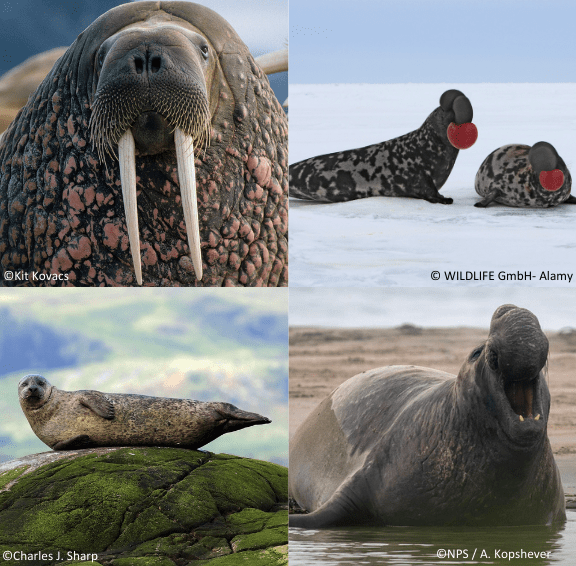
The walrus is the largest pinniped in the Arctic, with the males being twice as heavy as females. They can be found all around the Arctic, and are known for their moustache and their long tusks. Walrus are social animals, hauling out in tight groups on land or ice and travelling in groups at sea as well.
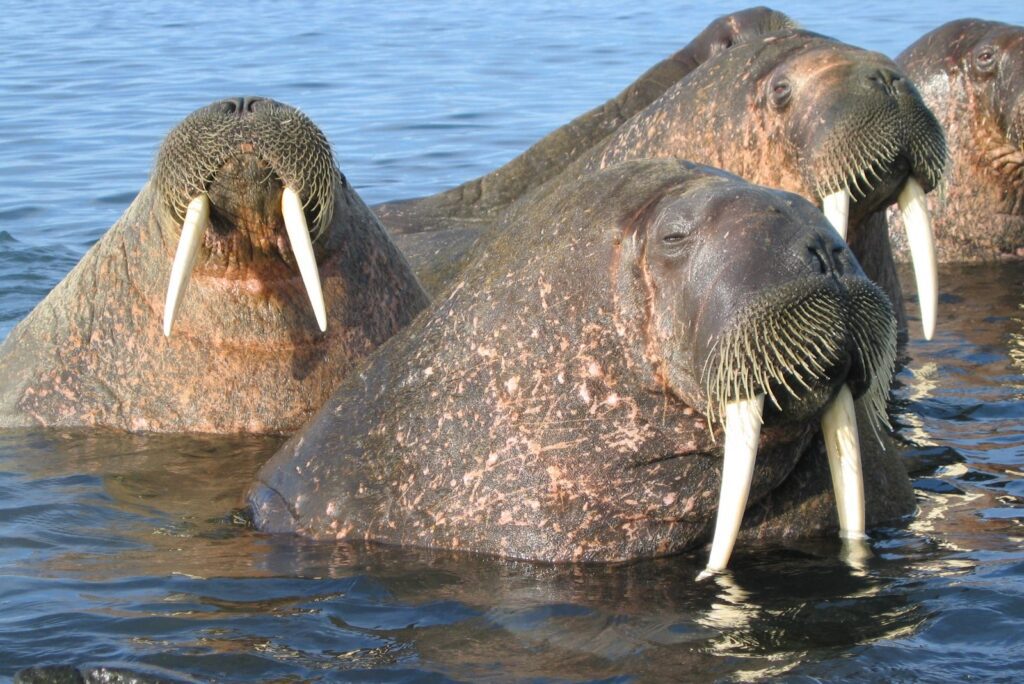
Walrus are famous for their tusks, which can grow up to 1 metre in length and weigh around 5 kilograms. Males’ tusks are usually slightly larger, and are used for fighting; the male with the largest tusks is usually the most dominant. Tusks can also be used to climb out of the water, or to make breathing holes in ice. Some large males have amber-coloured stains on their tusks from the blubber of the seals they might eat. Tusks are also valuable to humans, who make carvings and jewellery out of them.
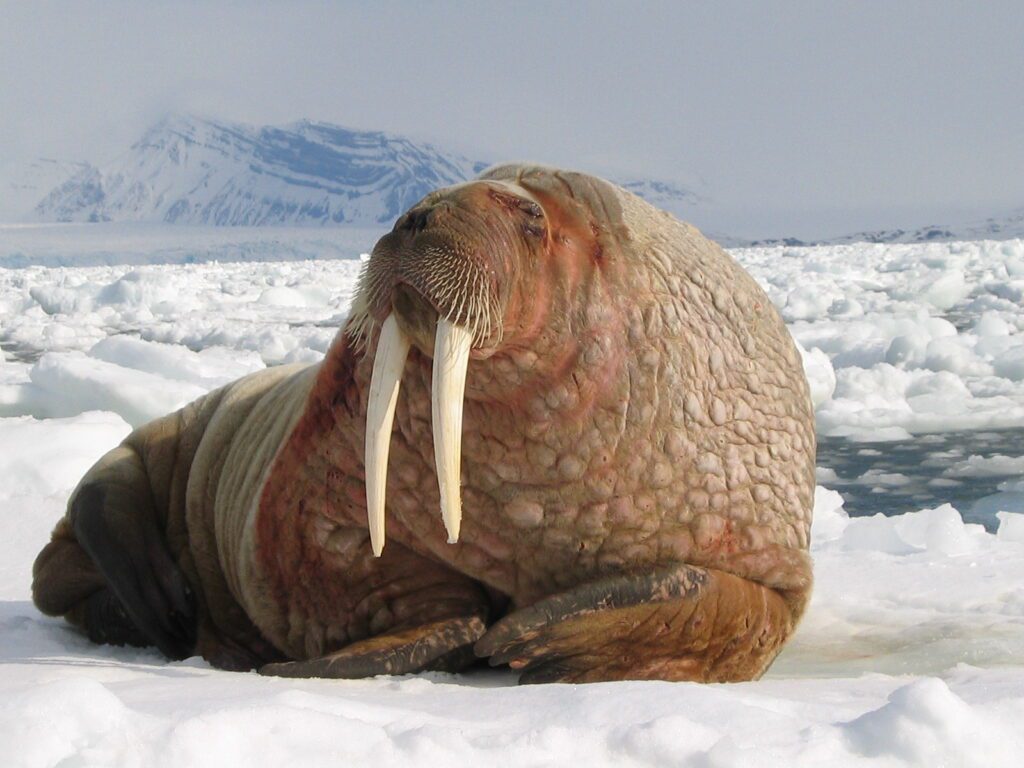
A walrus’ diet consists mainly of clams, which they find using their sensitive whiskers on or in the seafloor. When researchers studied the stomach content of walrus, they found only the meat of the clams, not the shells. This is because walrus suck the clams out, leaving the shells on the seafloor. They can eat thousands of clams in a single meal like this. The suction power of a walrus is about four times stronger than an average vacuum cleaner!
The situation of walrus in the Faroe Islands
We are working on this.
The situation of walrus in Greenland
We are working on this.
The situation of walrus in Iceland
We are working on this.
The situation of walrus in Norway
We are working on this.
The situation of walrus in Denmark
We are working on this.
Adult length 3 metres
Adult weight 1,500 kilograms
Max age 40 years
Eats mostly clams, other bottom dwellers, sometimes seals or birds
Group size up to several thousands
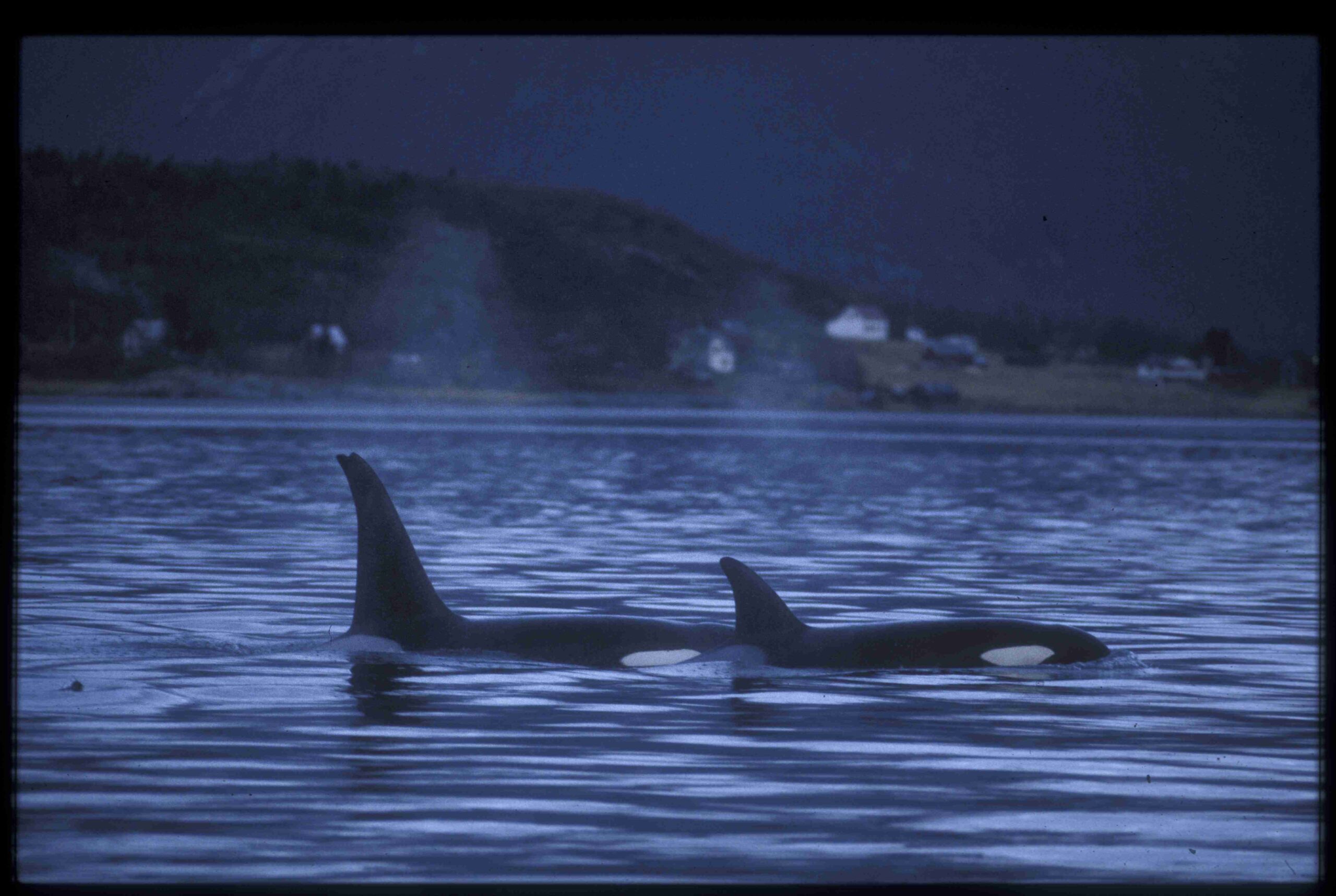
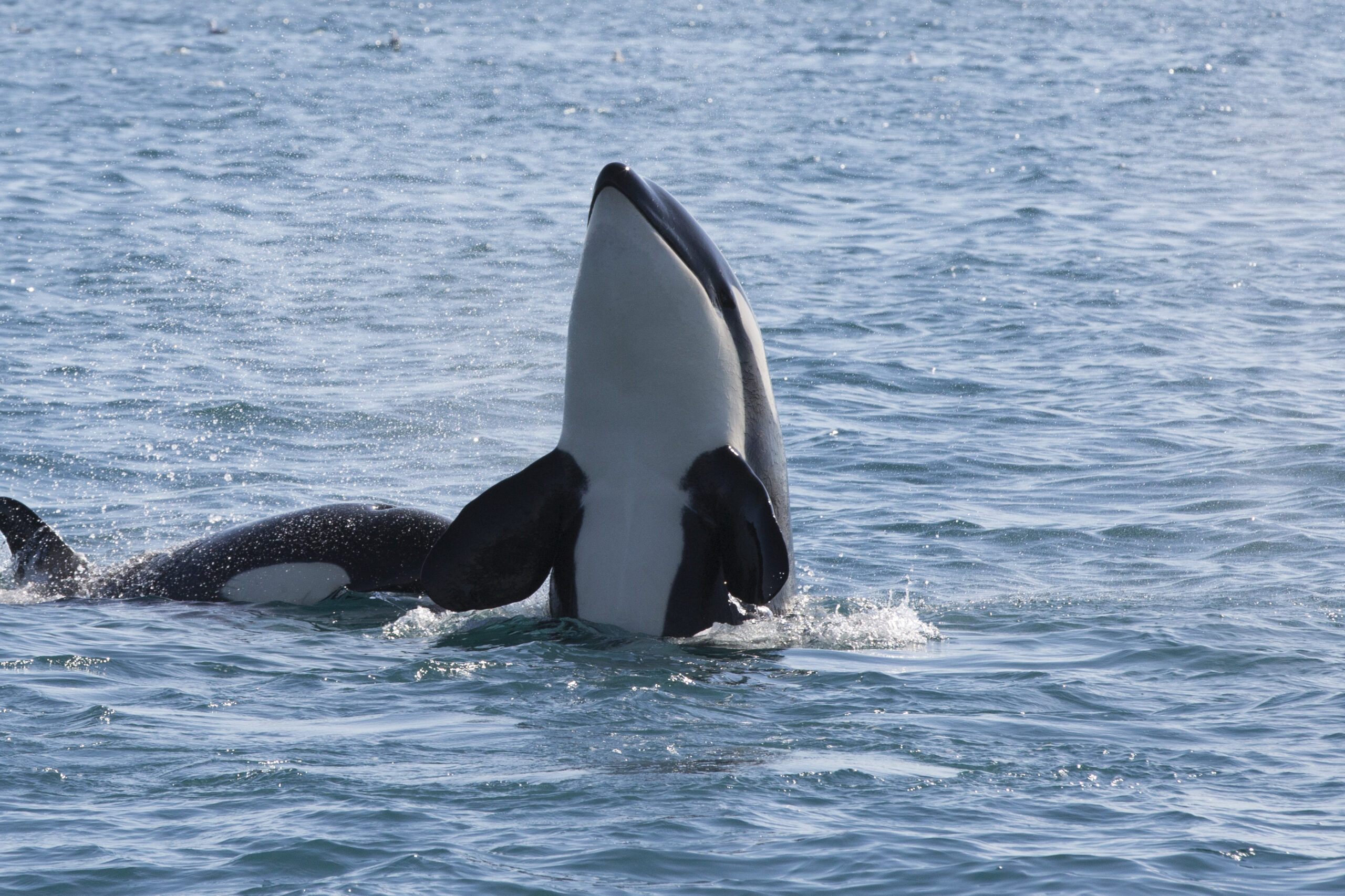
Predators polar bears, killer whales
IUCN status near threatened (2023)
NA abundance 30,000
Hunted in
 53 walrus/year mean 2019-2023
Sound credit: Christian Lydersen, Norwegian Polar Institute
Main threats
Research
Walrus generally have a cinnamon brown colour, but sometimes they can look pink. Why is that?
Did you know that scientific name for walrus Odobenus rosmarus, means “tooth walking sea horse”?
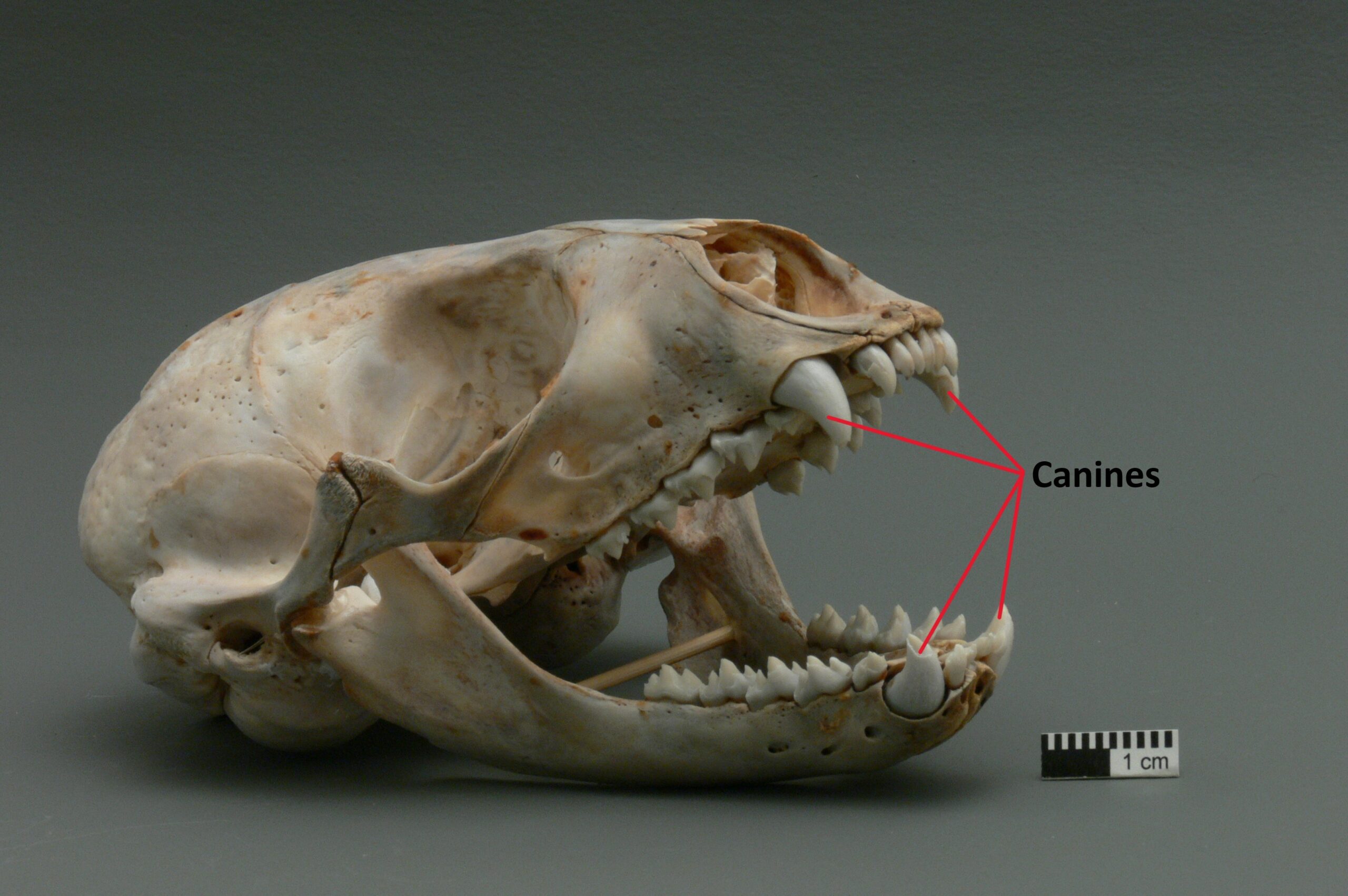
Walrus are one of the largest species of pinnipeds (the group that contains all types of seals and walrus) and is the largest member of this group to live in the Arctic. One of the most recognisable features of these animals are tusks, two modified upper canines—relatively long, pointed teeth. Both males and females grow tusks throughout their life, and these tusks may grow up to one metre.
Walrus use these tusks as a multi-functional tool: to help them climb up on ice, fight predators, and threaten and fight each other. Walrus use their tusks to sift through the seabed when searching for food. They also use these to help them stay afloat when sleeping in the water. They hang onto ice with their tusk to stay above the water surface so that they can keep breathing while sleeping.
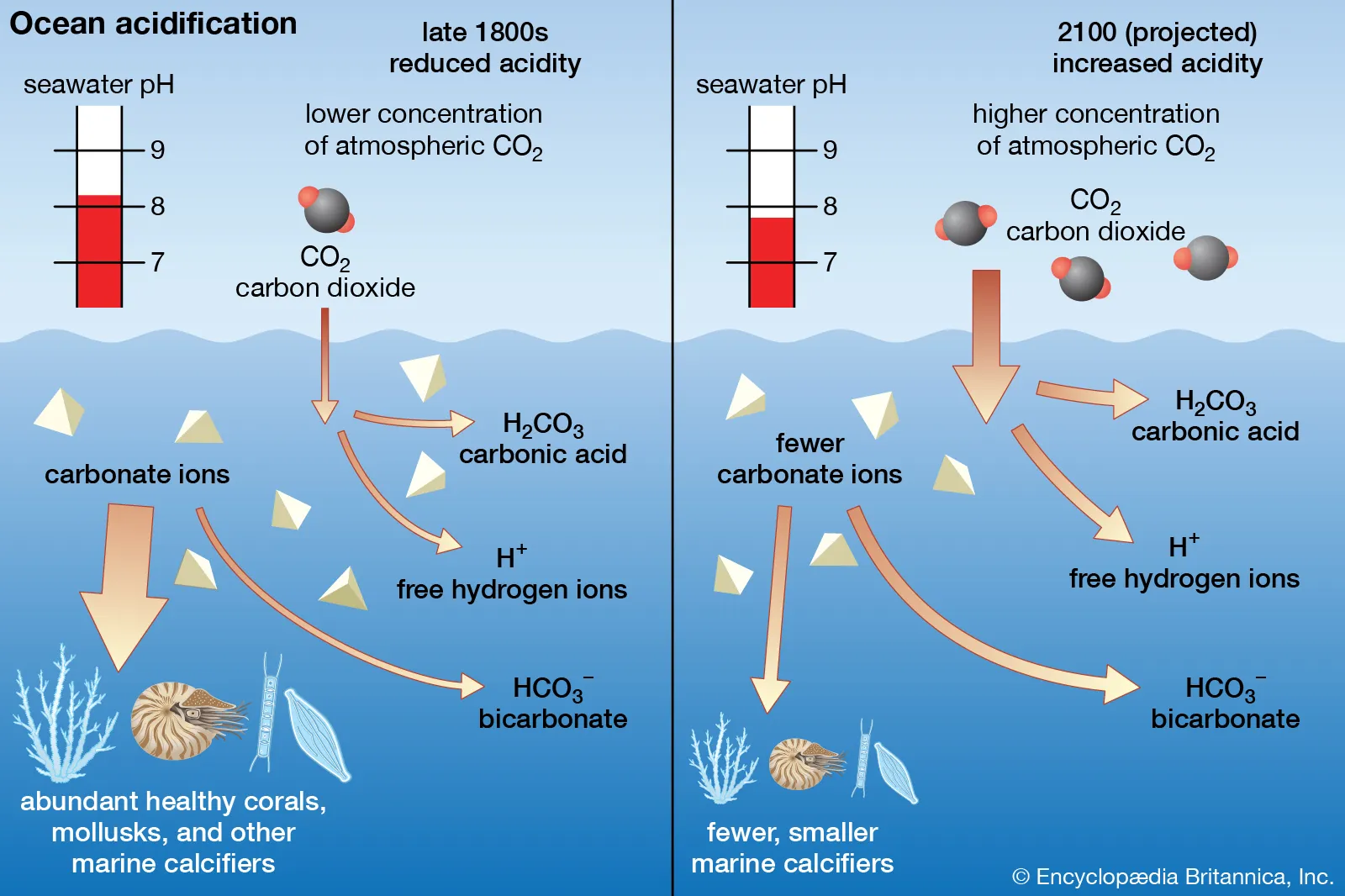
All walrus populations were overhunted historically; most are recovering following complete protection or quota-based hunting. The greatest threat for walrus today is climate change and its associated impacts on sea ice. Changes in sea ice alter their habitat and expose them to increased human activity. In addition, with changing sea water acidity, bivalves—the main prey of walrus—may be impacted, which can cause changes in the walrus diet.
Did you know that despite being Arctic animals walrus can travel long distances?
On Saturday 11th of June 2022, a young walrus was found lying asleep on a leisure boat in the coastal town of Kragerø, in Southern Norway. The surprised residents called the local fire brigade, who got the animal out of the boat, but as it kept swimming back, it was decided to allow the unexpected visitant to lie there. Later, the coast guard cordoned off the area to protect it from people, and by Sunday morning, the walrus was gone.
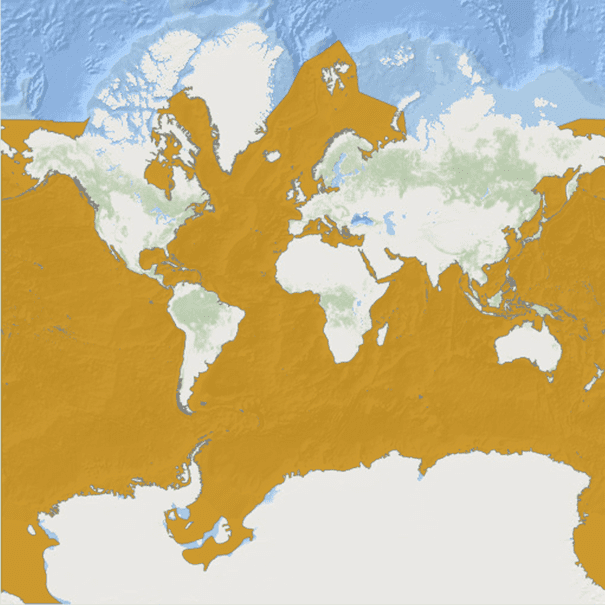
Walrus have a circumpolar distribution (this is, they are distributed in areas around the poles) including Norway, but they are not usually found in the mainland. Instead being year-round in the Norwegian Arctic Archipelago of Svalbard, thousands of kilometres away from Kragerø. Walrus can sometimes disperse long distances and end up in places far away from their natal sites, with records existing from latitudes further south, such as another young individual being spotted in the coastal city of Bilbao (Basque Country) in 2021.