- Grønlandsslættibøka
- Arfivik
- Grænland hvalur
- Grønlandshval
- Bowhead whale

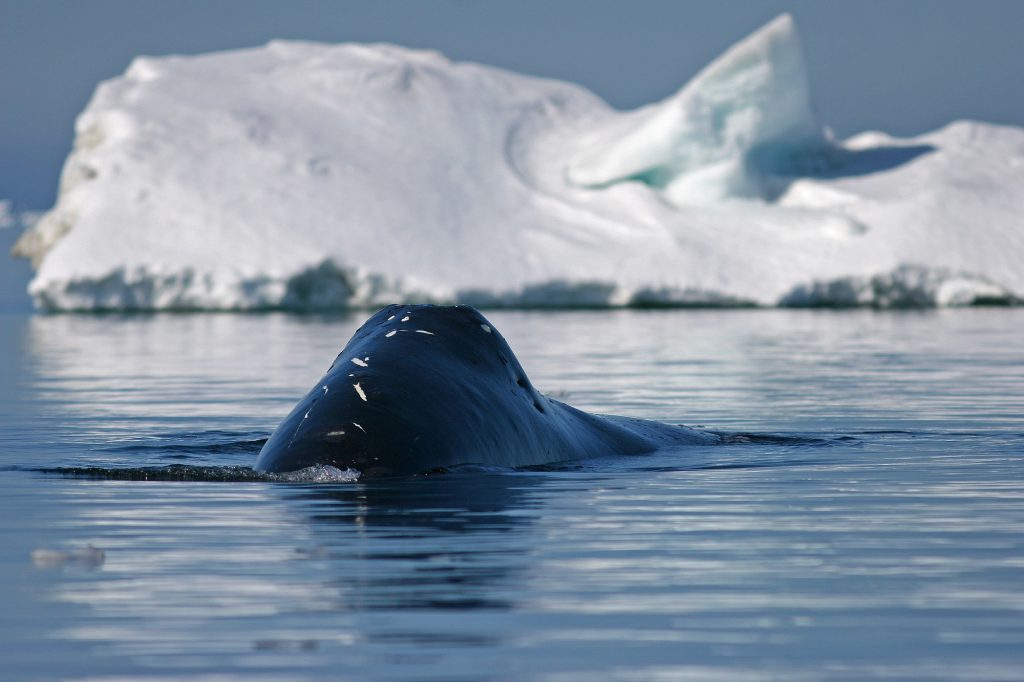
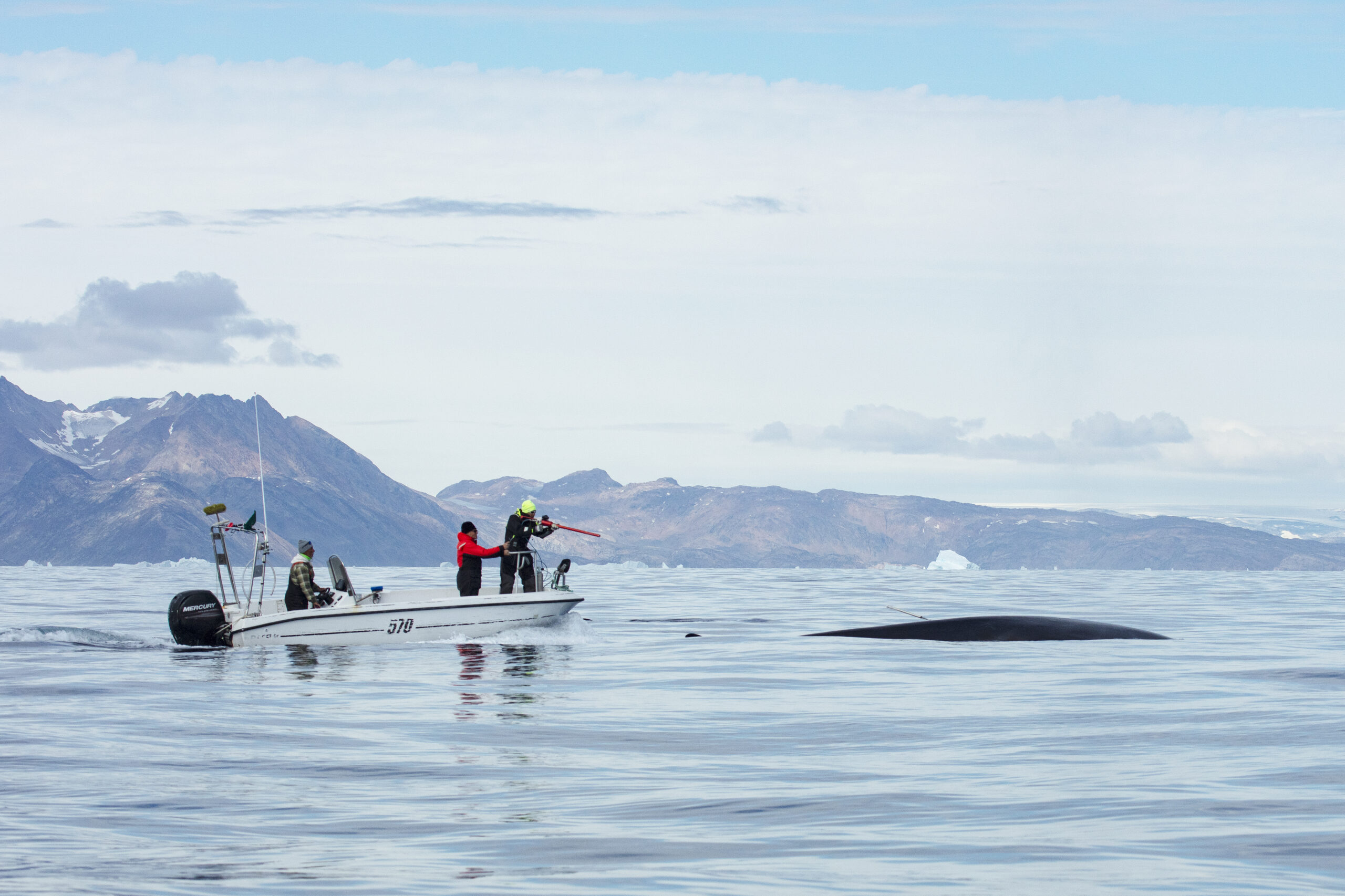
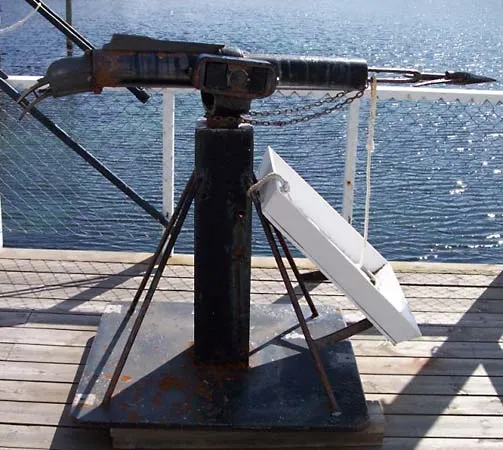
Det er ikke let at bestemme alderen på en grønlandshval. En grønlandshval fanget i Alaska havde dele af en harpun siddende i skulderbenet – en type, der ikke havde været brugt i over 100 år. Det betød, at hvalen var mindst 115 år gammel.
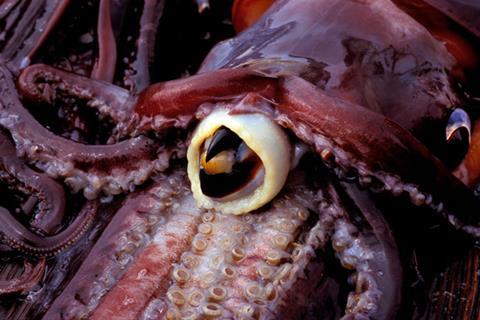
Den mere almindelige metode er at analysere et kemisk stof, asparaginsyre, i linsen i hvalens øje. Stoffet ændrer form med en bestemt hastighed gennem hele hvalens liv, og det gør det muligt at beregne dens alder. Nyere undersøgelser peger på, at grønlandshvaler kan blive over 200 år gamle (noget, lokale fangere længe har vidst).

 0,2 hvaler/år gennemsnit 2019-2023
Lydkreditering: Outi Tervo, Grønlands Naturinstitut
Forskning
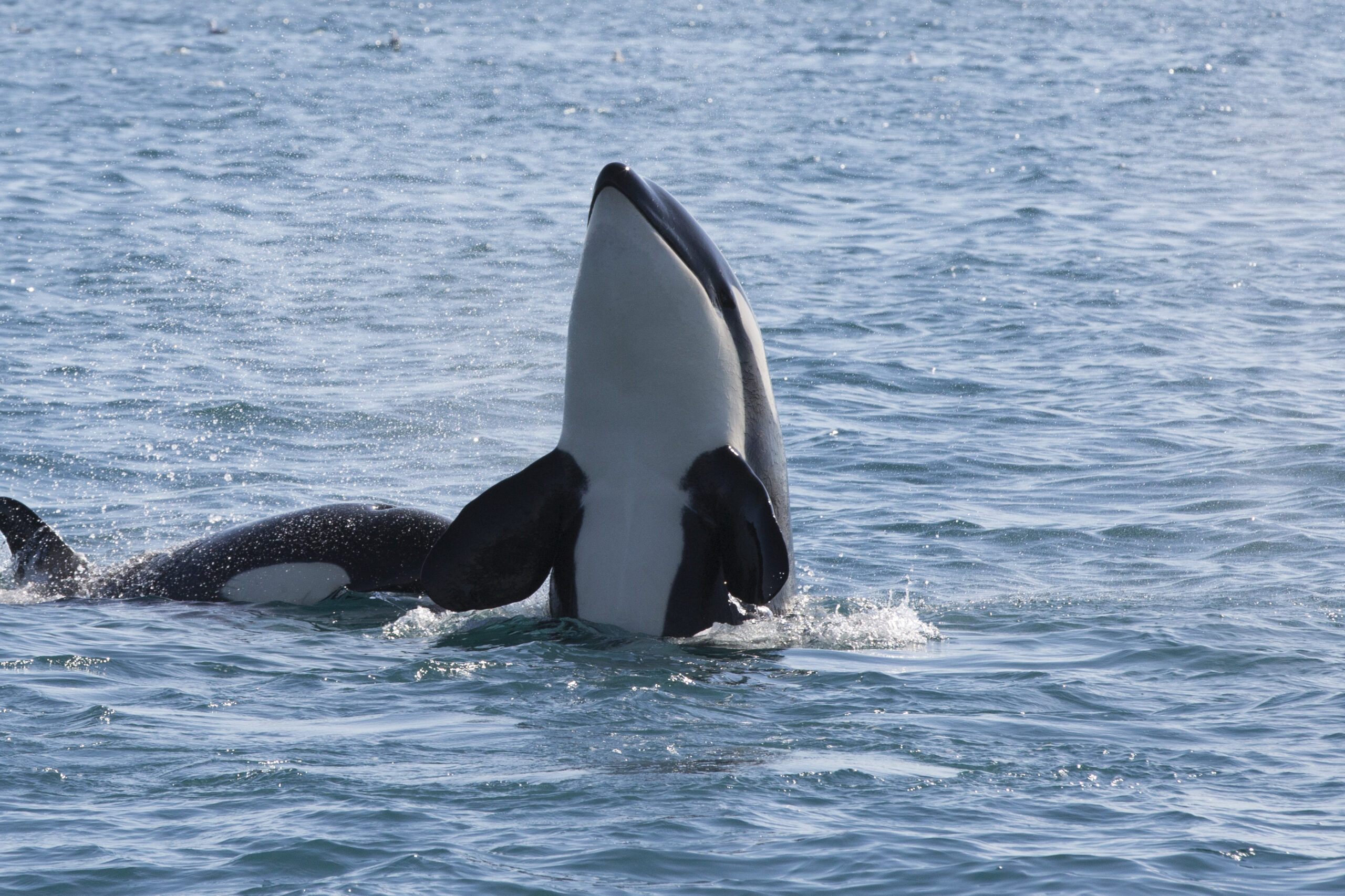
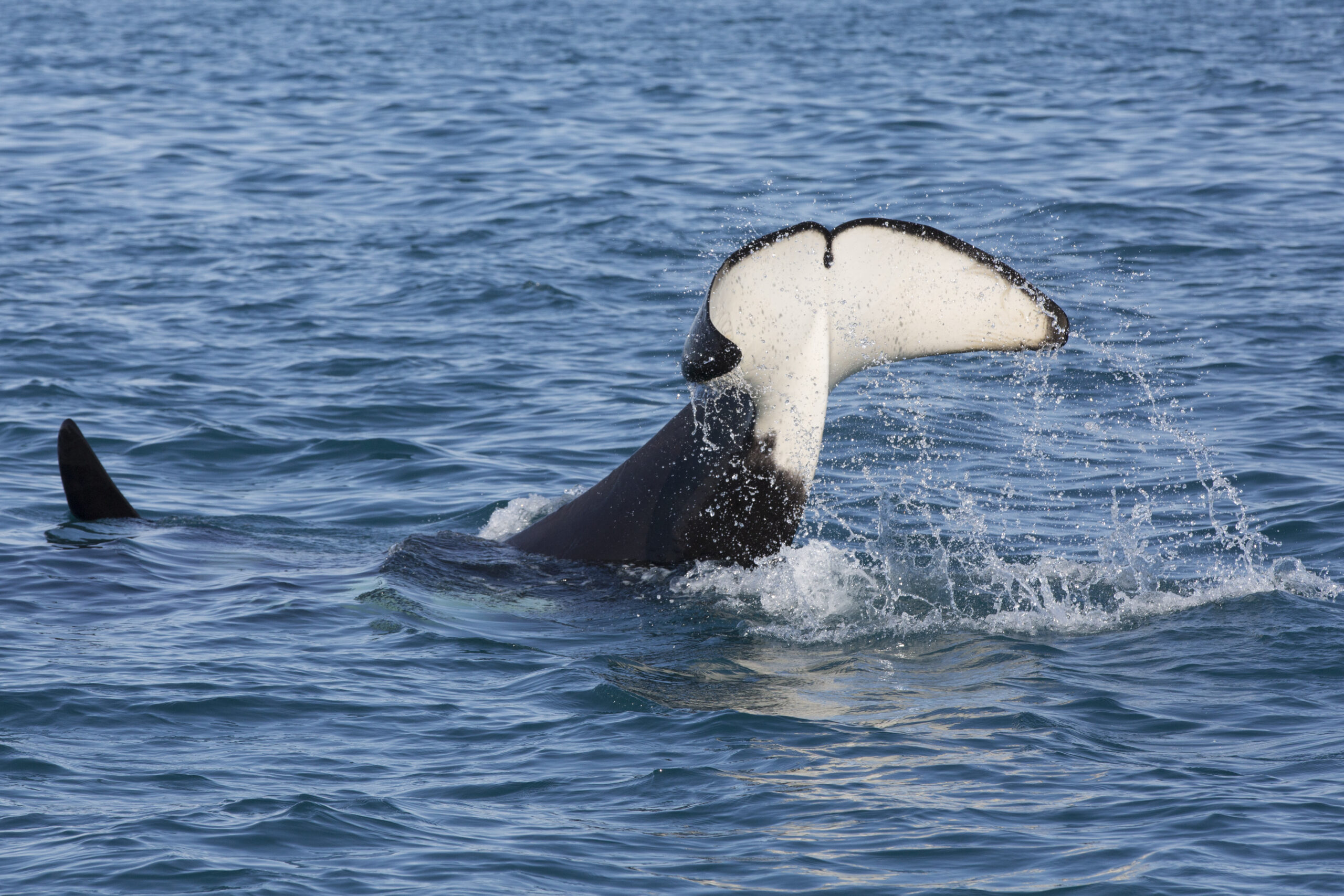
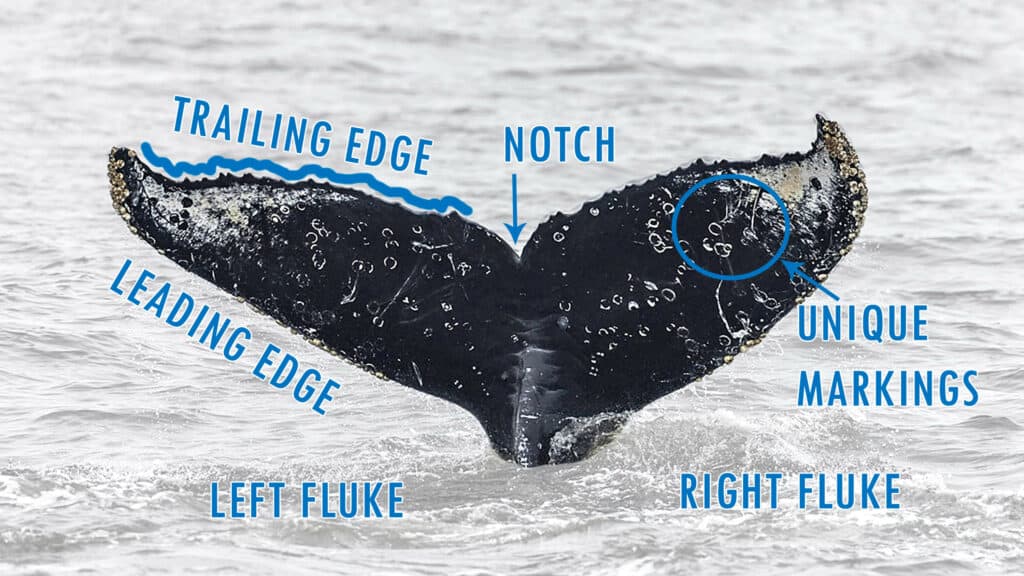
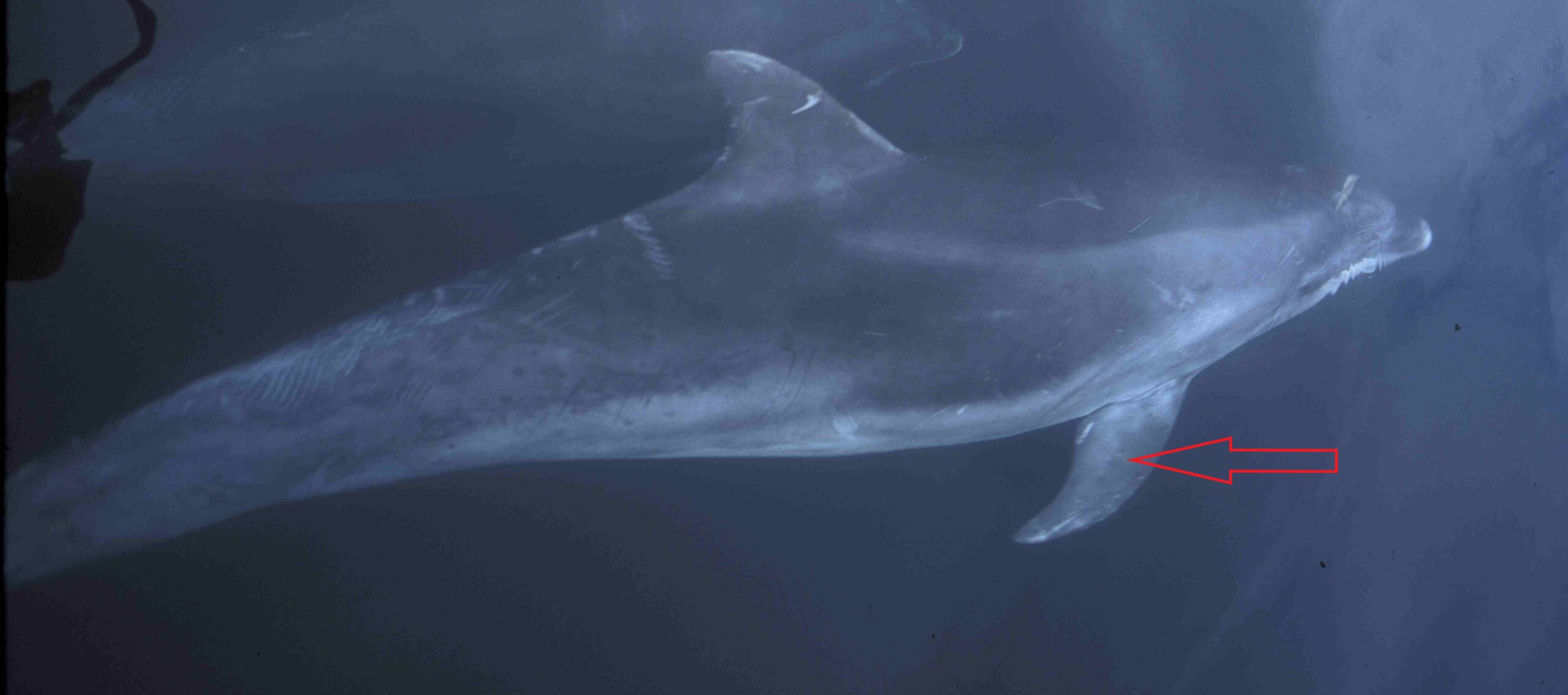
For at kende forskel på individer holder forskerne øje med specifikke kendetegn på kroppen. Hos delfiner kigger man på rygfinnen, hos pukkelhvaler på halefinnen. Hvad kigger man efter hos grønlandshvalen?
✔️ Answer: The bowhead whale!
Weapon fragments from the 19th century used for whale hunting were discovered in bowhead whales in Alaska in 2007. Combined with an age-estimation technique that analyses proteins present in the eye lenses of these creatures, scientists revealed that some bowheads may live for more than 200 years! This information is not just fascinating: it is also crucial for the conservation of these great creatures. Marine mammals in the high north face heightened challenges due to climate change and human activities. Comparing longevity in the past and the present helps us evaluate how these threats affect them today.
Interestingly, yawning in aquatic species, like belugas, is intriguing because they don't breathe through their mouths, as fully aquatic mammals have a separate trachea and esophagus. Nevertheless, the open mouth behaviour displayed by beluga whales during certain events has been described as "yawn-like" due to its resemblance to yawning in terrestrial mammals. But why do belugas yawn, and what triggers this behaviour? The function of yawning in animals, including belugas, remains somewhat mysterious. In humans, yawning has been associated with various factors such as sleepiness, respiration and circulatory needs, boredom, arousal, empathy, and thermoregulation. The observation of Ames (2022) raises questions about whether belugas, with their social and imitative abilities, may have the capacity to imitate human motor movements. Read the full observation by Ames (2022) here: https://doi.org/10.1578/AM.48.6.2022.495