- Døglingur
- Anarnaq
- Andarnefja
- Nordlig nebbhval
- Njunnefális
- Northern bottlenose whale
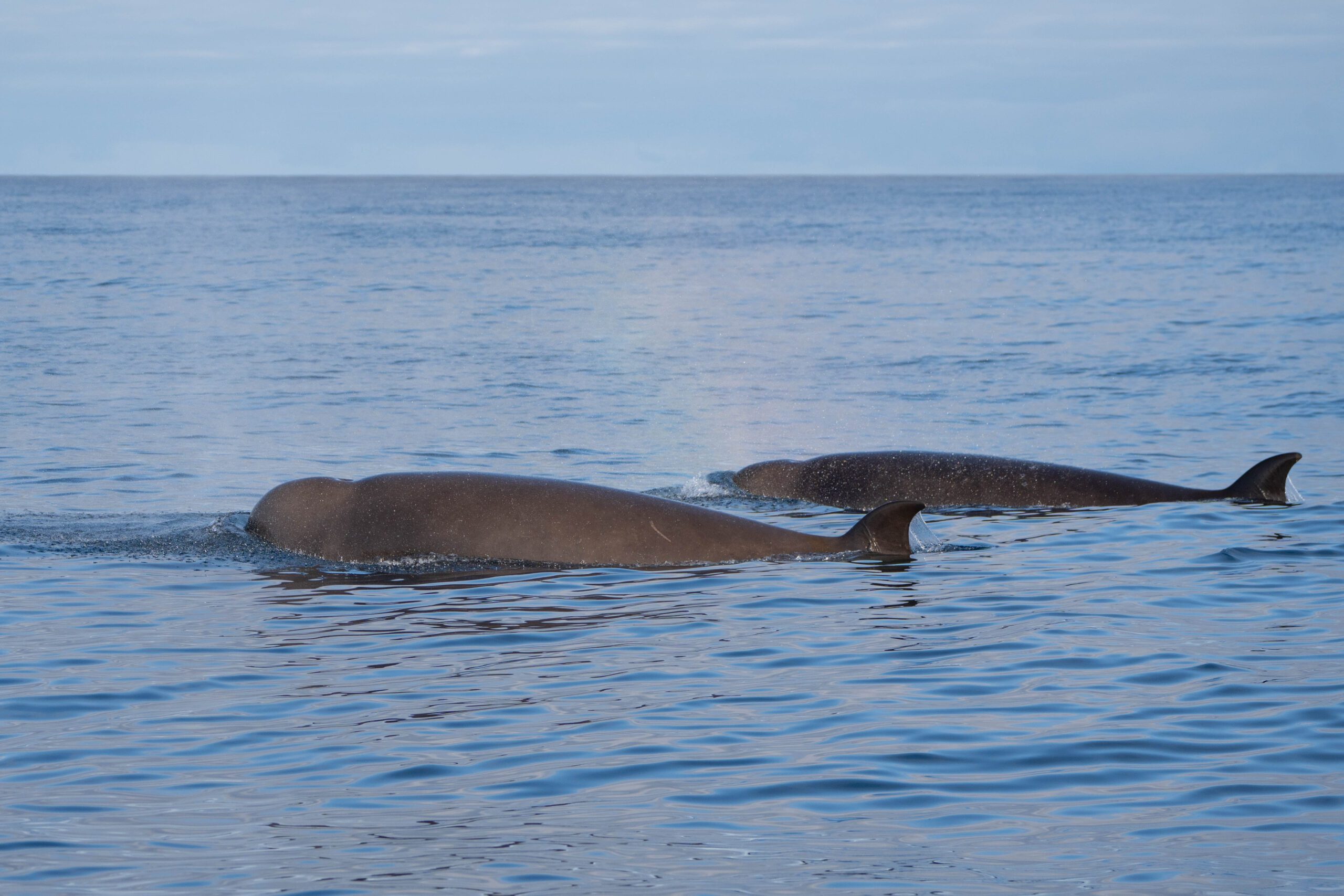
Den nordlige døgling er en tandhval, der tilhører familien af næbhvaler. Den findes kun i det nordlige Atlanterhav og især i de kolde og subarktiske farvande (farvandene syd for Arktis). Farven er gråbrun med en lille rygfinne og et langt, delfinlignende næb. Ligesom andre næbhvaler er den specialist i dybe dyk. Det dybeste, målte dyk af en nordlig døgling var 2.340 meter og varede 94 minutter [1].
Hanner af nordlig døgling har store, flade pander med ekstra tæt knoglevæv. Forskere mener, at de har udviklet ekstra stærke knogler i panden, fordi de støder hovederne mod hinanden i kamp [2]. Man har nogle få gange observeret to voksne hanner svømme i cirkler og derefter fare mod hinanden og støde hovederne sammen. Denne adfærd tolkes som en kamp mellem hanner, muligvis for at konkurrere om hunner – ligesom hjorte eller geder på land, der med horn kæmper pande mod pande. De kraftige, forstærkede pander hos hannerne er sandsynligvis en tilpasning til dette. Hunnerne har rundere og blødere hoveder.

I modsætning til de fleste næbhvaler er den nordlige døgling naturligt nysgerrig. De tiltrækkes af lyden fra motorer og generatorer og søger ofte hen til langsomt sejlende skibe. Denne adfærd gjorde dem tidligere til lette mål for industrielle hvalfangerskibe. De blev fanget i stor skala for deres olie – især en særlig type olie, som den nordlige døgling har i hovedet – og senere for kødet, der blev brugt som foder til husdyr og dyr på pelsfarme. Fangsten toppede midt i 1900-tallet, men ophørte i begyndelsen af 1970’erne. I dag bliver den nordlige døgling sjældent jaget, selvom enkelte stadig fanges i Grønland og på Færøerne, hvis de strander.

References
[1] Miller, P.J.O., Kvadsheim, P.H., Lam, F.P.A., Tyack, P.L., Curé, C., DeRuiter, S.L., Kleivane, L., Sivle, L.D.,van IJsselmuide,S.P., Visser, F.,Wensveen,P.J., von Benda-Beckmann,A.M., Martín López, L.M., Narazaki, T. and Hooker, S.K. (2015). First indications that northern bottlenose whales are sensitive to behavioural disturbance from anthropogenic noise. Royal Society Open Science, 2(6), 140484. http://dx.doi.org/10.1098/rsos.140484
[2] Gowans, S., & Rendell, L. (2006). Head-butting in Northern Bottlenose Whales (Hyperoodon ampullatus): a possible function for big heads? Marine Mammal Science, 15(4), 1342-1350. https://doi.org/10.1111/j.1748-7692.1999.tb00896.x
Udvokset længde 9 meter
Udvokset vægt 8,000 kg
Maksimal alder 37 år
Spiser især dybhavsblæksprutter, indimellem fisk, søpølser, søstjerner og rejer
Gruppens størrelse 4-20
Rovdyr Spækhuggere
IUCN-status Ikke truet (2023)
Forekomst i Nordatlanten tæt på 20,000
Jaget i
 4 hvaler/år gennemsnit 2019-2023
Lydkreditering: University of Iceland’s Westman Islands Research Centre
Research
Hvor mange tænder har den nordlige døgling? Og hvad bruger næbhvaler generelt deres tænder til?