Journey across the ocean
In this activity you will play “Bingo” to learn about whale migration patterns
Background
Scientists study whale and dolphin migration patterns to be able to understand and assess the impact of human activities to protect critical habitats, such as breeding grounds and feeding grounds, monitor ecosystem health, and understand the effects of climate change. Understanding where and when whales migrate is essential for effective management and conservation efforts.
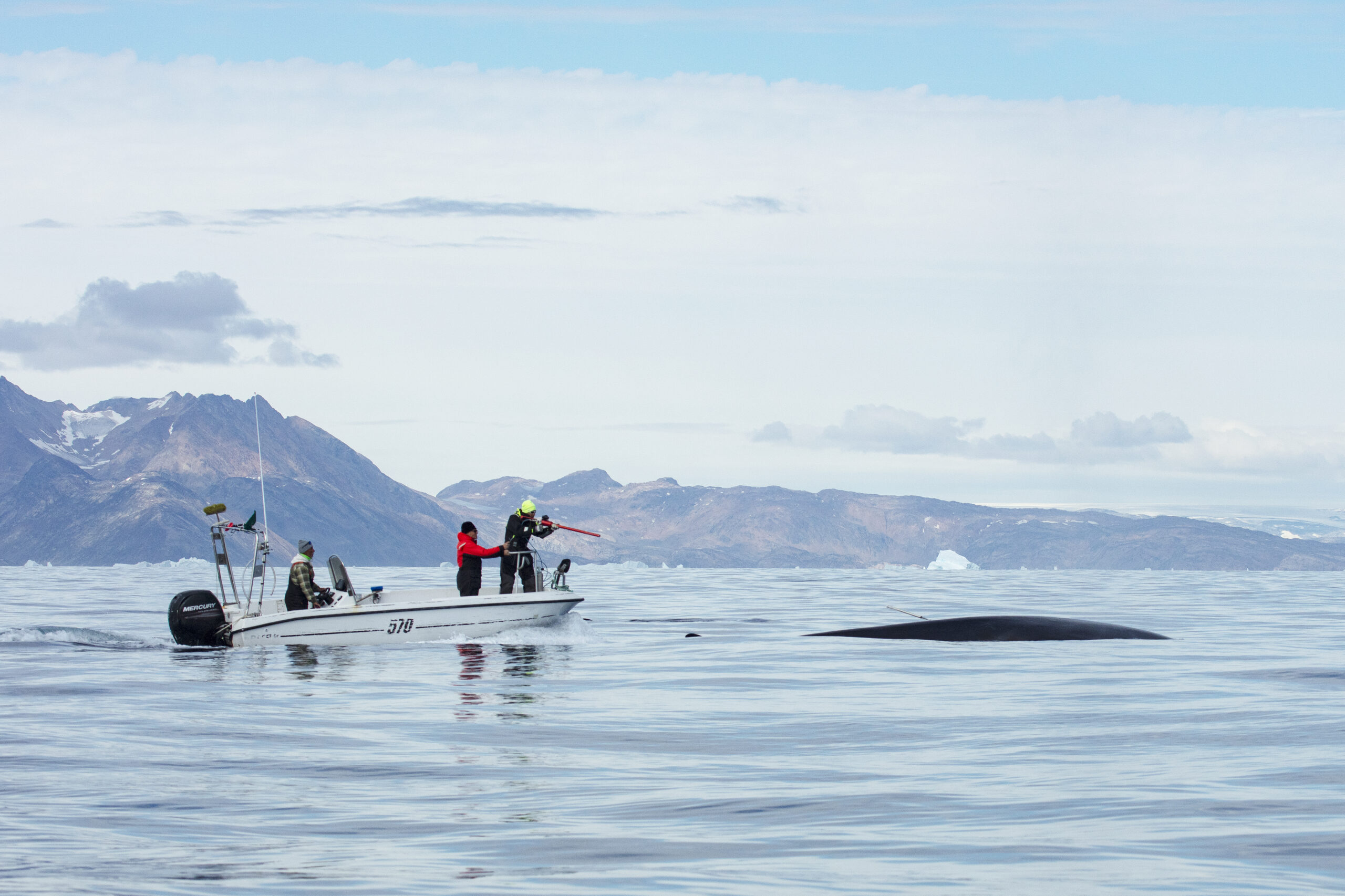
To track these migration patterns, scientists often use satellite tagging, which allows them to learn about whale movements across the globe. One of the current satellite tagging projects is the MINTAG project. MINTAG aims to develop tags that can track large fast-swimming rorquals, and other whale species of interest—the main species being fin, minke, and pilot whales—throughout the year, providing comprehensive datasets on their geographic locations and their possible interactions with human activities.
Procedure
In this activity, you will play a bingo game with a twist. Instead of crossing off numbers, you will mark geographical points on a map.
Each point is identified by an ordered pair of coordinates, in the form of (X, Y). The first number (X) represents the x-coordinate, or longitude, while the second number (Y) represents the y-coordinate, or latitude. To graph a point, students will place a dot on the map where the coordinates intersect.
- Give each student a “bingo” card, which is a map showing a whale’s track (the maps in
Handout 1).
- The teacher will then call out coordinates either randomly (page 4) using the
Coordinate randomiser. Read the coordinates by their full name to get the students used to it. For example: read “79°N, 10°E” as “seventy-nine degrees north, ten degrees east”.
- Students must find the called-out coordinate on their map. If the coordinate is on their map, they should circle it. If it is not, they should place a cross at the correct location.
- When a student has circled all the coordinates on their map, they call out “BINGO”. The teacher then checks the map to confirm the student’s bingo is correct.
Follow-up discussion
- Compare the cards with each other. Notice that all the migration paths follow a north-south pattern. Why do you think this happens? Can you guess what might occur in the northern and southern regions?
- Some animals in this activity belong to the same species but follow different migration paths, as seen with the fin whale. Why do you think this is the case? What challenges might these animals face along their different migration routes? Consider the concepts of “population” and “stock/subpopulation” in your explanation.
- Whales are thought to rarely feed during their migration and to not eat during the breeding season. How can they manage this?
- Using the GUARDNA cards, each student should pick an interesting fact about the species on their card and explain it concisely to the class.
Extension
- Follow the MINTAGged whales. On the MINTAG page, you can track the real-time movements of whales that have been tagged with MINTAG devices and watch real footage of the tagging process.
Learning outcomes
Materials
- Material to write
- “Bingo” cards (
Handout 1)
- Scissors
Coordinate randomiser (or the table in page 4 in the Teacher’s document)
Related GUARDNA cards
Stakeholders