- Grønlandskópur
- Vöðuselur
- Grønlandssel
- Dealljá
- Grønlandssæl
- Harp seal
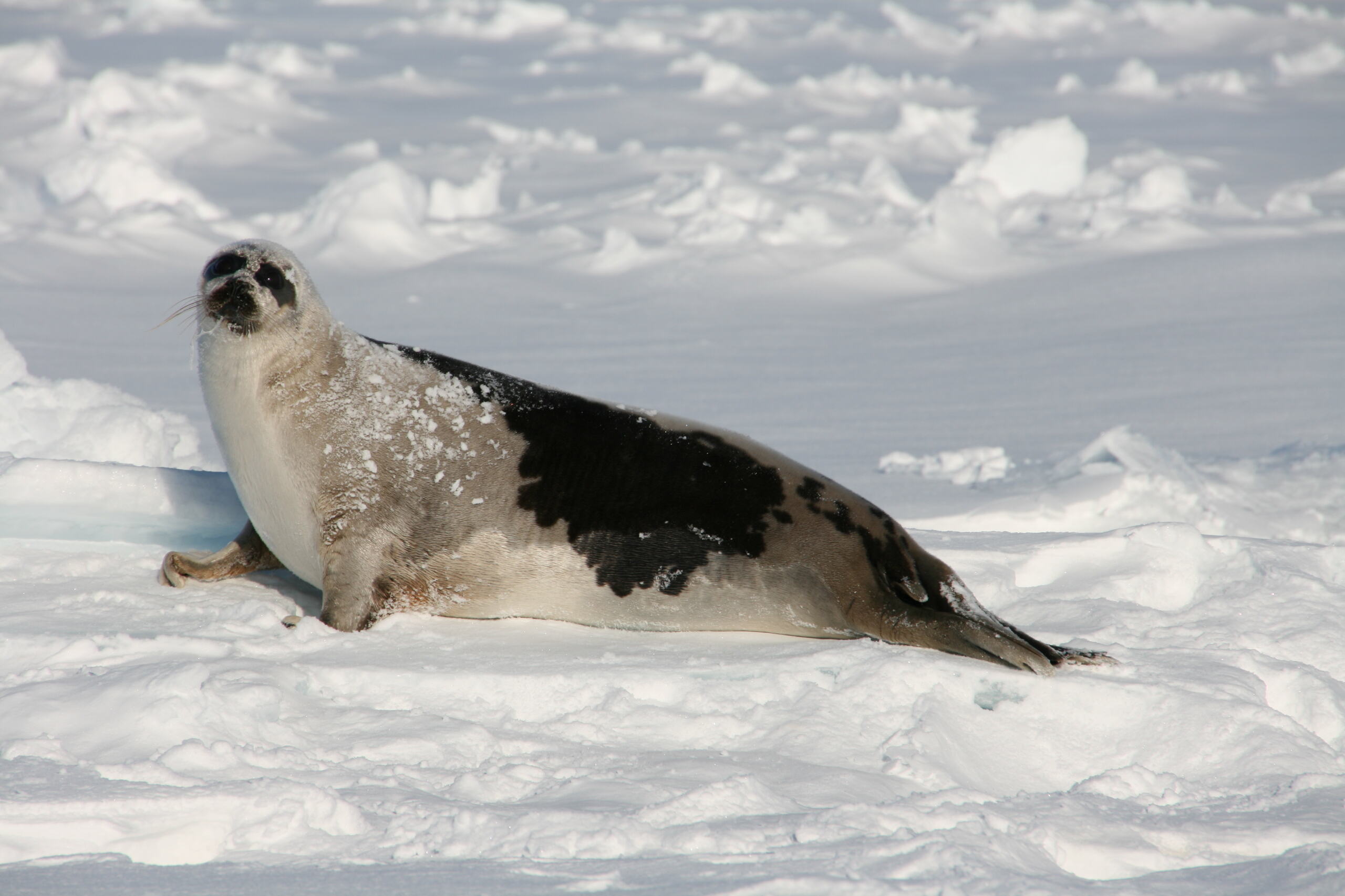
Harp seal is medium sized true seal species occurring in the waters of the North Atlantic. They are the most abundant pinniped species in these waters. Harp seals got their name for the distinguishable harp-shaped band adult males have on their side. The rest of their body is white or light grey. Adult females often do not have as pronounced harp on their back, rather light coat with dark spots. When hunting for food, harp seals can dive up to 400 metres and stay under water for about 16 minutes.
Harp seals are an ice breeding species. They haul out in large numbers to give birth and nurse their pups. Giving birth is quite synchronised in harp seals, so majority of harps seal pups are born within few days from one another. Pups are born completely white, covered with lanugo. They nurse for only about 10-12 days and in that period, they gain over 20 kilograms. After the nursing period, they go through their first moult, gaining the silvery coat with a few dark spots, characteristic for “beaters”. After that, they moult once a year, getting more and more spots in their coats until they get the recognisable harp shape on their backs.

Harp seals feed very little in the moulting and breeding season. For females, producing energy-rich milk to nurse their pups is highly demanding, so they conserve energy by not hunting. This also prevents leaving their pups alone. Moulting is equally strenuous, and their fur offers little protection against the cold Arctic waters. To conserve energy and retain warmth, moulting seals stay hauled out, basking in the sun. By the time they reach feeding grounds in spring, they are lean and ready to feed on lipid-rich prey to rebuild their blubber layer.

The situation of harp seals in the Faroe Islands
We are working on this.
The situation of harp seals in Greenland
We are working on this.
The situation of harp seals in Iceland
We are working on this.
The situation of harp seals in Norway
We are working on this.
The situation of harp seals in Denmark
We are working on this.
Adult length 1.6 metres
Adult weight 130 kg
Max age >30 years
Eats wide range of fish and invertebrates, including krill, amphipods, polar cod, cod, capelin
Predators killer whales, sharks, polar bears
IUCN status near threatened
NEA abundance not enough data
Hunted in
 36,255 seals/year mean 2019-2023.
5,020 seals/yearmean 2019-2023
36,255 seals/year mean 2019-2023.
5,020 seals/yearmean 2019-2023
 36,255 seals/year mean 2019-2023.
 5,020 seals/yearmean 2019-2023
Sound credit: Heidi Ahonen, Norwegian Polar Institute
Aarlerinartorsiortitsisut
Ilisimatusarneq
It is unclear how many harp and hooded seals are there in the North Atlantic. Why is it challenging for scientists to accurately estimate the total population of these species?