- Láturkópur
- Útselur
- Gråsel/Havert
- Ránesnjuorju
- Gråsæl
- Grey seal
aamma mamaarnerup nalaani 100-nit
amerlanerusut tikillugit
64 puisit/ukiumut 2019-2023-mi agguaqatigiissillugu
Nipi uannga: NOAA. Passive Acoustics Group. 2021. Gray seal. https://www.fisheries.noaa.gov/national/science-data/sounds-ocean
Aarlerinartorsiortitsisut
Ilisimatusarneq
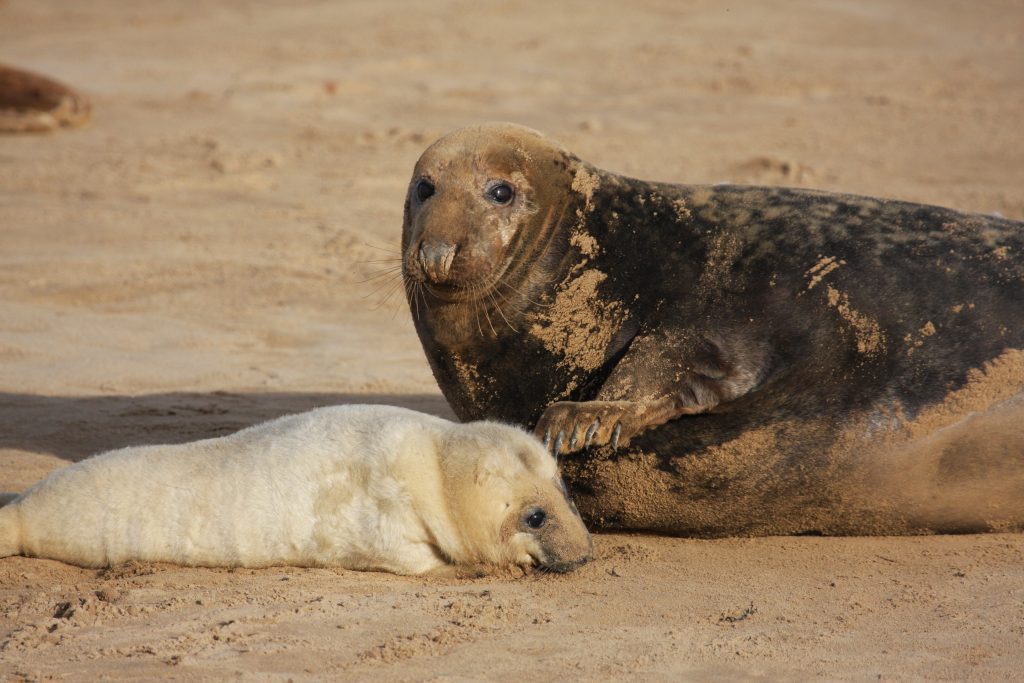
Issittup puisaasa piaraat sikumi erniusarput qaqortunillu meqqoqartarlutik, piniartunut takulliinaveersaatigalugu illersuutigisaminnik. Sigguttuut sikumi piaqqineq ajorput, taamaattorli meqqui aamma qaqortuusarput. Soormita taamaappat?
Grey seals can spend over two days in the open water while foraging. But how can they have energy to forage for that long? They rest in open water! Here is how.
Since they are marine mammals and breathe air, they need to keep their heads above the water. They achieve this in two ways: either lying horizontally with their heads (noses) and backs above the water, known as “logging”, or floating vertically with just their heads above the water, known as “bottling”. When they do this, they somewhat resemble a buoy. Resting in these positions allows them to stay in the open water for longer periods, enabling them to search for food farther away from shore without needing to swim back each time they need rest.
But why do belugas yawn, and what triggers this behaviour? The function of yawning in animals, including belugas, remains somewhat mysterious. In humans, yawning has been associated with various factors such as sleepiness, respiration and circulatory needs, boredom, arousal, empathy, and thermoregulation. The observation of Ames (2022) raises questions about whether belugas, with their social and imitative abilities, may have the capacity to imitate human motor movements. Read the full observation by Ames (2022) here: https://doi.org/10.1578/AM.48.6.2022.495