Umiarsuarmit eqqortinneq
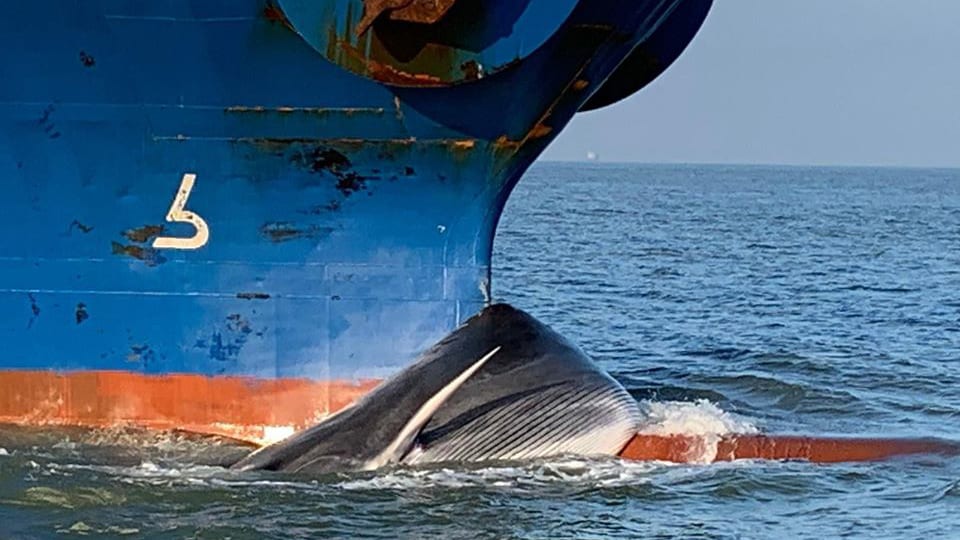


It may not always be possible to avoid areas important to marine mammals to reduce the risk of ship strike. Studies suggest that serious injuries to whales from collisions are uncommon at vessel speeds below 14 knots and rarely occur below 10 knots [2]. Slowing down is especially helpful for protecting slow-moving and resting whale species, which are often unable to avoid oncoming vessels, and is critical for larger vessels that cannot manoeuvre quickly. Slowing down also reduced Noise Pollution and emissions that contribute to Climate Change.

References
[1] DFO (2014). Science review of the final environmental impact statement addendum for the early revenue phase of Baffinland’s Mary River Project [Science Response 2013/024]. DFO Canadian Science Advisory Secretariat. https://publications.gc.ca/collections/collection_2014/mpo-dfo/Fs70-7-2013-24-eng.pdf
[2] Laist, D.W., Knowlton, A.R., Mead, J.G., Collet, A.S. and Podesta, M. (2001). Collissions between ships and whales. Marine Mammal Science, 17, 35-75. https://doi.org/10.1111/j.1748-7692.2001.tb00980.x
[3] Ifaw (2021). Ship strikes and whales: preventing a collission course. https://d1jyxxz9imt9yb.cloudfront.net/resource/1114/attachment/original/Ship_strikes_and_whales_-_factsheet.pdf
[4] Marine Mammal Commission (n.a.). North Atlantic Right Whale. https://www.mmc.gov/priority-topics/species-of-concern/north-atlantic-right-whale/
[5] Tournadre, J. (2014), Anthropogenic pressure on the open ocean: The growth of ship traffic revealed by altimeter data analysis. Geophysical Research Letters, 41, 7924–7932, https://doi.org/10.1002/2014GL061786.
[6] Leaper, R. (2019). The role of slower vessel speeds in reducing greenhouse gas emissions, underwater noise and collision risk to whales. Fontiers in Marine Science, 6, https://doi.org/10.3389/fmars.2019.00505
Things to know...
- Most reports of collisions involve large whales, but all species can be affected.
- For every whale we know has been fatally injured by ship strike, an estimated 20 whales experienced the same outcome but go unnoticed [3].
- Ship strikes are among the first causes of death of North Atlantic right whales along the Atlantic coast of Canada and the US [4].
- Ship size, speed, and number of ships increase drastically in the last 50 years, also increasing the risk of ship strike [5]
- A 10% decrease in speed throughout the global fleet would cut the risk of ship strikes by half [6].