- Stökkul, höfrungar
- Tumler
- Øresvin, døgling delfin
- Bottlenose dolphin
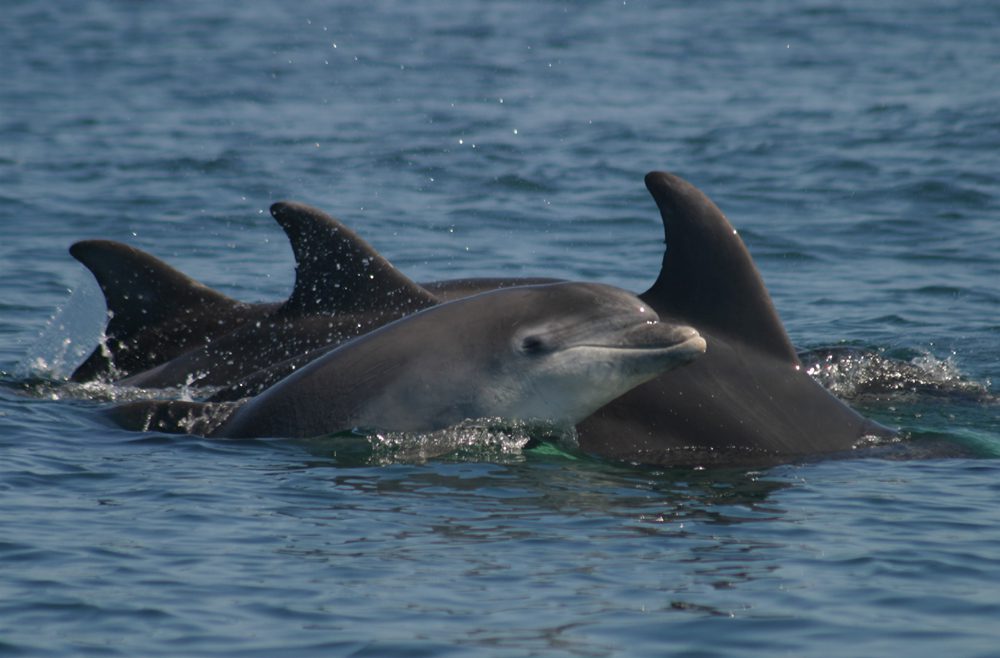
The bottlenose dolphin is one of the most well-known dolphin species, found in warm and temperate seas around the world. They are easily recognised by the way their forehead curves over their beak and their curved mouth that looks like a smile. Bottlenose dolphins often live in so-called “fission-fusion” societies, with individuals grouping together and splitting up at different times of the day or year. Known for their playful nature and acrobatic displays, they are often seen riding waves or leaping from the water. Their curiosity and frequent interactions with boats make them a familiar sight to people at sea.
Bottlenose dolphins are one of the few non-human animals known to use tools. Some place marine sponges over their snouts while foraging on the seafloor to protect themselves from sharp objects and stingers. This behaviour is passed from mother to calf, showing cultural learning. Dolphins have also been seen using empty shells to trap fish, bringing the shell to the surface and shaking it so the fish falls into their mouth. They are also known for their playful use of objects, such as draping seaweed over their fins or heads and tossing jellyfish. These behaviours highlight both their intelligence and their curiosity about the world around them.

Each bottlenose dolphin creates a unique “signature whistle” that functions like a name. These whistles help individuals identify and stay in contact with one another, especially in murky water or over long distances. Dolphins often repeat each other’s whistles to call out or respond, showing strong recognition and memory. Mothers and calves rely heavily on this contact, particularly when separated. Dolphins can remember the signature whistles of former companions even after years apart. This complex use of sound reveals their advanced social awareness and communication skills.

The situation of bottlenose dolphin in the Faroe Islands
We are working on this.
The situation of bottlenose dolphin in Greenland
We are working on this.
The situation of bottlenose dolphin in Iceland
We are working on this.
The situation of bottlenose dolphin in Norway
We are working on this.
The situation of bottlenose dolphin in Denmark
We are working on this.
 98 dolphins in 2022
Sound credit: University of Iceland’s Westman Islands Research Centre
Gransking
How is a bottlenose dolphin brain different from other dolphins? How do you think that relates to the variety of their feeding habits?