Veiða

Whaling and sealing continue to be a reality for many Northern coastal communities, simply because marine mammals are present, nearby and abundant, and therefore a logical resource in an environment where other resources can be scarce. These animals represent an invaluable resource, bringing food and money, as well as job opportunities in places where non-marine resources are limited and job opportunities few. Marine mammal hunting represents a threat for whale and seal populations only when it is not done sustainably. In NAMMCO member countries it is heavily regulated but still remains controversial for many inside as well as outside.


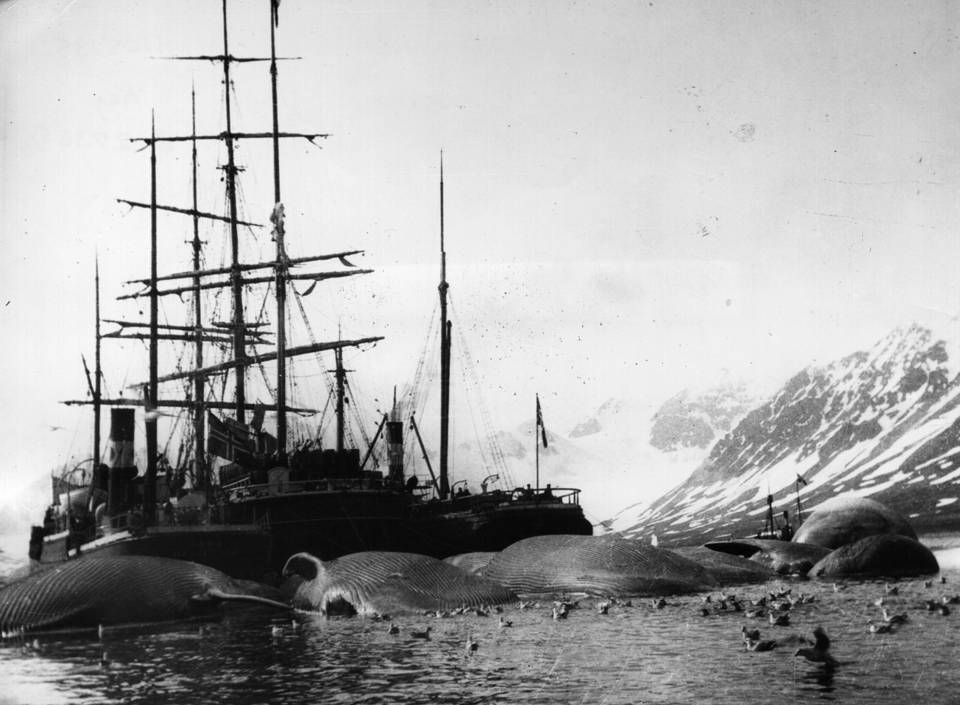
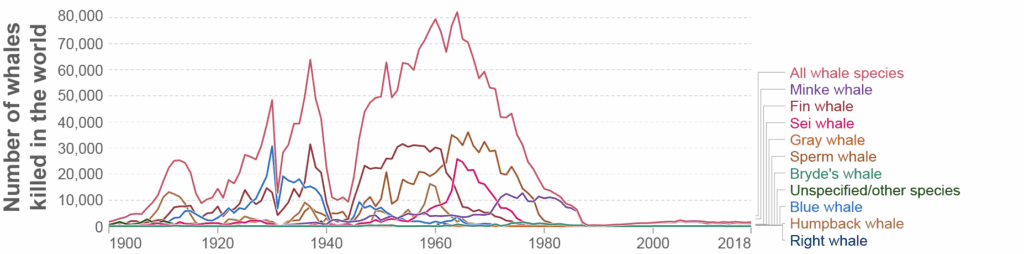
In the past, subsistence and coastal whaling and sealing were conducted in a largely sustainable manner, with hunting efforts and impact limited in scale and geographic extent. Things changed when commercial whaling and sealing began around the 11th century. By the 1600s, fleets were organised, and by the 1860s, new technology made it possible to hunt industrially. This led to over-hunting, causing some species to almost go extinct, and others to be heavily depleted. Industrial whaling and sealing in the late 19th and 20th centuries became an example of how overuse and poor management can harm wildlife.
Today’s hunt is in many ways very different from the industrial whaling and sealing in the past centuries. Managing hunting responsibly means using sustainable practices and the most effective methods for killing the animals. It implies making rules for using resources and implementing reliable monitoring. NAMMCO member countries have set clear rules on which stocks can be hunted, how many animals, when, and how. Each country has its own inspection system to monitor these activities. NAMMCO Observation Scheme also send observers to check if the hunts follow recommendations and oversees national inspections.
References
[1]
[2] Rocha, R. C., Clapham, P. J., & Ivashchenko, Y. V. (2014). Emptying the oceans: a summary of industrial whaling catches in the 20th century. Marine Fisheries Review, 76(4), 37-48. https://doi.org/10.7755/MFR.76.4.3