Hvala- og sílavaktarar
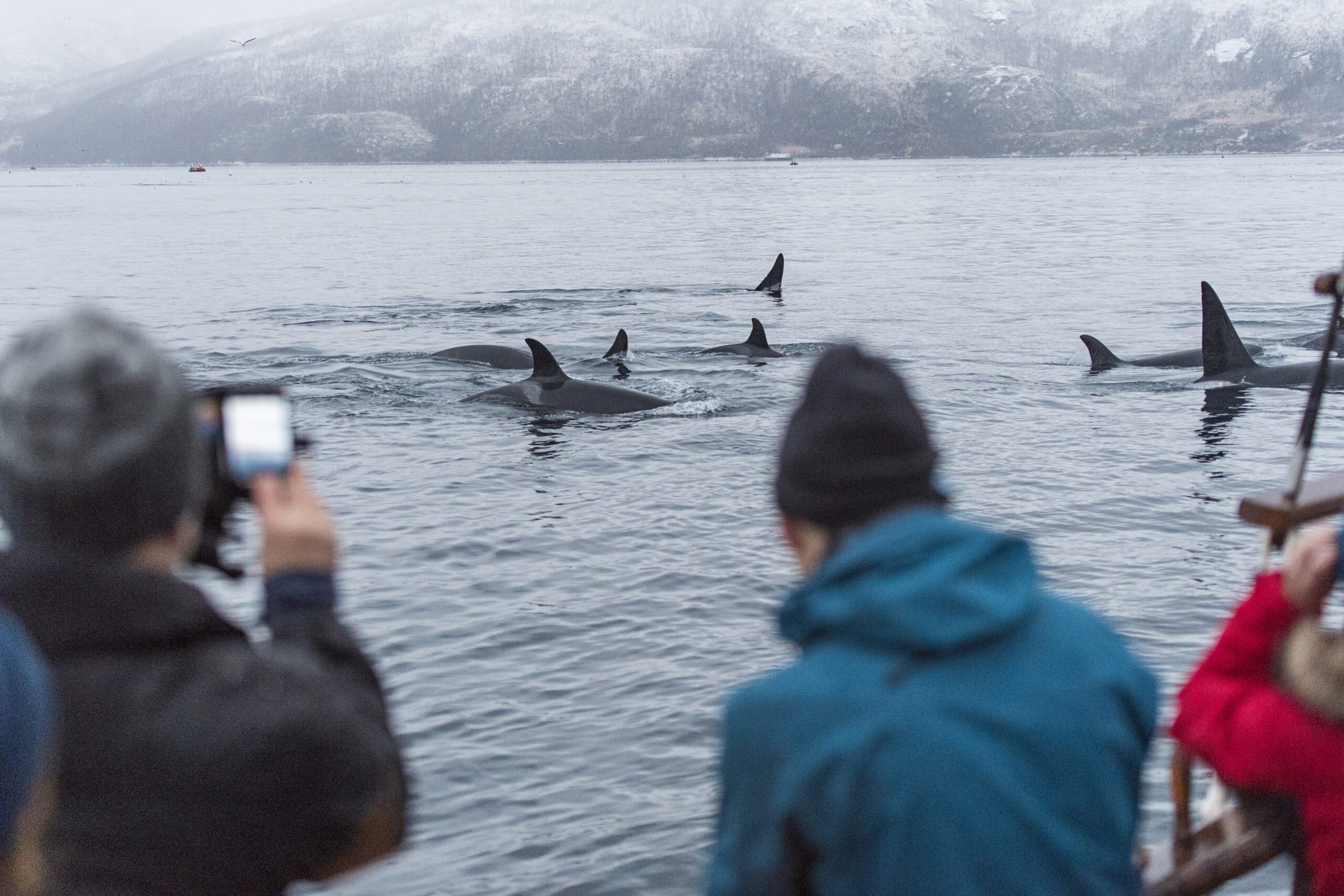
Whale and seal watching is a popular activity for tourists and local for recreation, exploration, and cultural experiences. Some people go whale or seal watching because it is a popular activity at their destination, while others seek our specific destinations that are known for their whale and seal watching opportunities. For locals and tourists alike, it is becoming more and more important that the tours they go on are educative, sustainable, and support conservation.
Seeing marine mammals in the wild can make people care more about these animals and the marine environment. This can lead to a change in lifestyle, making more sustainable choices, and speaking about conservation.
Whale and seal watchers can also serve as advocates for marine mammal conservation by spreading awareness, supporting conservation initiatives, and influencing public opinion and policy decisions in their home countries.

There is an increasing demand from tourists for sustainable and educational experiences [5]. This demand influences tour operators to adopt eco-friendly practices and can encourage policymakers to implement conservation measures in marine mammal tourism regulations. As a result, there is a growing emphasis on responsible tourism that benefits both marine mammals and the environment they depend on.

Mapping the scientists' influence
Move each stakeholder to a position in the graph based on what you think their level of interest and ability to influence decisions is. Click on their names to learn more about them.


References
[1] O’Connor, S., Campbell, R., Cortez, H., & Knowles, T. (2009). Whale Watching Worldwide: tourism numbers, expenditures and expanding economic benefits (Special report from the International Fund for Animal Welfare). Yarmouth, USA. https://www.cms.int/sites/default/files/document/BackgroundPaper_Aus_WhaleWatchingWorldwide_0.pdf
[2] Koetje, J. (2020). Whale watching – A win-win for the economy and the whales in Massachusetts. National Marine Sanctuaries. https://sanctuaries.noaa.gov/news/dec20/whale-watching-in-stellwagen-bank.html#:~:text=A%20recent%20study%20revealed%20that,can%20be%20an%20unforgettable%20experience
[3] Suárez-Rojas, C., Hernández, M. M. G., & León, C. J. (2023). Sustainability in whale-watching: A literature review and future research directions based on regenerative tourism. Tourism Management Perspectives, 47, 101120. https://doi.org/10.1016/j.tmp.2023.101120
[4] Bejder, L., & Samuels, A. (2003). Evaluating the effects of nature-based tourism on cetaceans. In N. Gales, M. Hindell, & R. Kirkwood (Eds.), Marine mammals: Fisheries, tourism and management issues (pp. 229-256). CSIRO Publishing.
[5] Zeppel, H. (2008). Education and conservation benefits of marine wildlife tours: Developing free-choice learning experiences. The journal of environmental education, 39(3), 3-18. https://doi.org/10.3200/JOEE.39.3.3-18