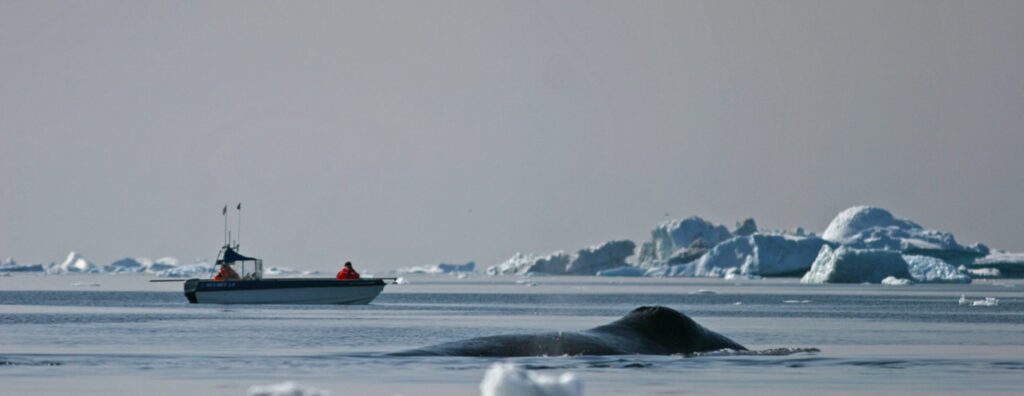



Kelp forests are important underwater habitats in arctic and subarctic waters. They are large congregations of brown algae—kelp—that provide food and safety for many marine species and are recognised as one of the most productive and dynamic ecosystems on Earth. Sea urchins are one of the species that feed on kelp. When population of sea urchins grow uncontrollably, due to their predators being removed from the food web, they overfeed on these forests and cause them to disappear, destroying entire ecosystem. Once the kelp is gone, it is replaced by other algal species that don’t have the same function as kelp.
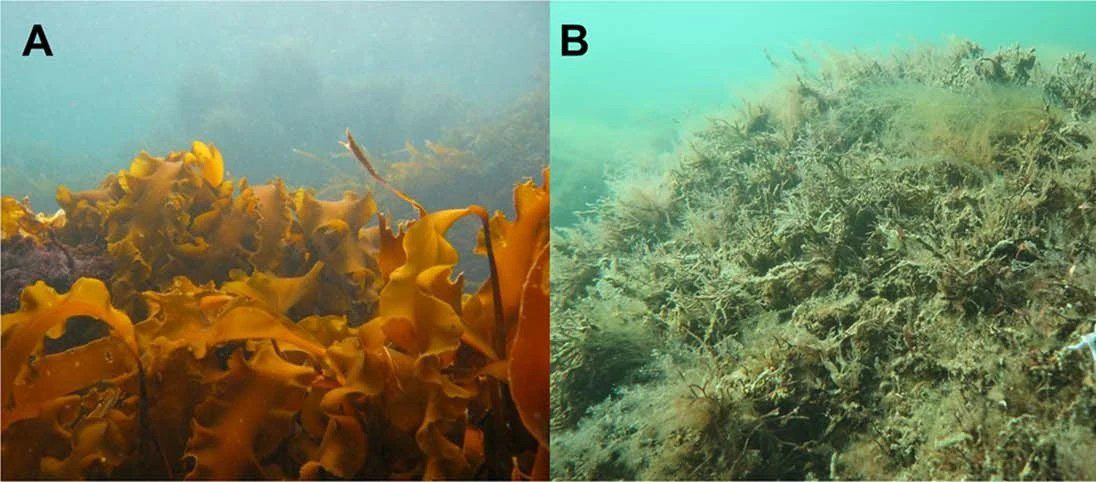
The physical and ecological damage or degradation of the ocean floor caused by natural events or human activities, leading to the loss of marine habitats, biodiversity, and ecosystem functions.

The process of raising sea water temperatures caused by the Earth’s atmosphere trapping more heat due to greenhouse gas emissions, with the oceans absorbing most of this excess heat. The ocean warming can have catastrophic consequences on all life, both in the water, but also on land.

The process of sea water becoming more acidic (lower pH value) caused by the excess of the atmospheric carbon dioxide (CO2) dissolving in the water and forming acid. The levels of carbon dioxide are rising due to different human activities, such as burning fossil fuels, deforestation, and industrial processes. The ocean acidification causes issues for all life in the ocean.

The ability of female mammals to produce food for their offspring. The mammary glands produce milk that is rich in all the nutrients that the offspring needs for optimal growth and development. The milk content differs from species to species, depending on what the young need for its development.

The process of digging a valuable material, minerals, from the Earth. Mining can be surface or underground. In surface mining, the minerals are extracted from near the Earth’s surface and this type can be very destructive to surrounding area. The underground mining consists of taking minerals from deep under the surface by digging or blasting the tunnels. This can also be very dangerous as it can lead to collapse of the tunnels and trapping the miners but also effecting the surrounding environment.

The mechanical process of removing sediment, debris, or other material from the bottom of bodies of water such as rivers, harbours, lakes, or oceans. It is done to keep waterways deep enough for ships, support port construction, extract underwater resources like sand, prevent flooding by clearing blockages, and clean up polluted sediments. Dredging can harm marine ecosystems by destroying habitats on the sea floor, increasing water turbidity, and disturbing or displacing marine life. It may also release pollutants trapped in the sediment, affecting water quality and the health of nearby organisms.

In simple terms, aquaculture is farming in the water, both fresh and sea. It is the breeding, raising, and harvesting aquatic organisms, such as fish, shellfish, crabs, or algae for profit.

Quick growth in the population of algae in fresh or marine water systems. It is usually characterized by the changes in colouration of the sea depending on which species of algae have caused the bloom (red, brown or green). These blooms are result of excessive amount of nutrients in their environment that allow algae populations to grow rapidly. These blooms have harmful effect on the environment and rest of the species that live in the area. First, these massive colonies limit the amount of light that penetrates the surface. Also, often times these blooms start producing toxins as a by-products of their metabolism which is harmful to all the life in surrounding areas.

Oil derived from whales. Whale oil extracted from different species has different names and uses. The sperm oil is extracted from sperm whales, train oil from baleen whales, and melon oil from small toothed whales.

A ship or a boat. Craft used for navigation on the water.

Creatures from Celtic and Norse mythology. Shapeshifters that can change form between seals and humans by removing or putting on their seal skin.

Global North and Global South are the terms used to group countries based on their defining characteristics with regard to socioeconomics and politics. More specifically, the Global North consists of the world’s developed countries, whereas the Global South consists of the world’s developing countries and least developed countries. The terms do not reefer to the Northern and Southern hemisphere, as some of the countries of Global North are located in the geographical south, and vice versa.

Pieces used in board games, like chess or checkers. The game pieces were historically carved from different natural materials like wood and ivory, and in some countries that were whale hunting countries, they were made from marine mammal bones.

Family of toothed whales counting 22 species. They are the least known of all whale species because they mostly stay in deep ocean. There are many things we still don’t know about them, as they are oceanic species, meaning they keep away from the shores, they stay away from boats, and are difficult to observe and identify. Almost everything we know about these animals we learned from stranded animals. They are named after their extended snout, and most species of this family only have one pair of tusk-like teeth only visible in males.

Area or region that is undisturbed by the human activity. Regions that are uncultivated and not inhabited by humans.

In anatomy, septum is a wall that divides a larger cavity or structure into smaller parts. For example, nasal septum is a cartilages wall that separates nose into two separate structures.

Greenlandic word for kayak. Small, one-person wooden vessel used by Indigenous people for hunting and transportation. In Greenland, it is traditionally made from seal skin stretched over a frame made od whalebone or driftwood.

A marine protected area (MPA) is a clearly defined region established to conserve marine biodiversity, ecosystem health, and cultural heritage. As part of a globally connected network, MPAs help safeguard marine resources while ensuring the continued supply of essential ecosystem services. Effects of MPAs can be seen not just in the areas themselves, but also surrounding areas, as marine life “spills” over the boarders of the MPA increasing biodiversity and biomass in the areas around MPA. Not all MPAs have the same level of protection: while some are fully protected and nothing can be taken from there, some allow for some level of extraction.

Food and Agriculture Organisation is a body of the United Nations (UN) with the main goal of defeating the world hunger and achieving food security for all.

Frozen sea water. It covers part of the Arctic and Antarctic regions throughout the year, and also forms seasonally in some regions.

Irregularly shaped bones that form vertebral column or spine. Vertebrate animals were named for having a spine, compared to invertebrates which don’t have it. The role of the spine is to protect spinal cord, as well stabilise pelvic bones and upper body, and allow movement.

Distribution type where species occur over a wide range of longitudes, but only in high latitudes. That means that species can be found all around either the North or the South Pole. An example of species with circumpolar distribution is a polar bear.

Phenomenon when members of the same species and opposite sexes have difference in appearance. It can be size, shape, colour, or different organs.

Also known as ulu, or a women’s knife. Traditional all-purpose knife used by Indigenous women of Arctic. It is used for all kinds of purposes, from skinning and cleaning animals, to cutting hair or food, and even trimming ice blocks.

Large, open-water areas within pack ice. They can be coastal or open-ocean.

A round, fatty organ located in the forehead of the toothed whales and used in echolocation and communication. Its function is to focus and adjust animals’ vocalisation. It also acts as a sound lens.

Leads in sea ice are linear fractures in sea ice that occur at any time of the year. They can extend for hundreds of kilometres and can be from a few to several hundreds of metres in width.

Even when a pod of whales gets surrounded by ice due to rapidly forming sea ice. Whales are unable to leave the entrapment, and this can lead to death of some or all pod members.

Domesticated birds kept by humans for the purpose of harvesting animal products such as meat, eggs, and feathers.
Any area of sea ice that is not attached to the land and is made up of smaller parts that have frozen together. Because it is not attached, pack ice can move. It expands during the winter and recedes during the summer.

Adaptive management is a structured, step-by-step approach to improving resource management by learning from the outcomes of past decisions. It involves making decisions in the face of uncertainty, closely monitoring the results, and adjusting strategies over time. The goal is to reduce uncertainty and improve decision-making by continuously refining practices based on what is learned. It emphasises accountability and clarity in each decision-making step, allowing for flexibility and better long-term management of resources.

According to NOAA, ecosystem-based management is an integrated approach that incorporates the entire ecosystem, including humans, into resource management decisions, and is guided by an adaptive management approach.

All animals that feed on plants or phytoplankton.

Process in which primary producers—plants and phytoplankton—use sunlight, water, and carbon dioxide to produce energy in the form of sugar glucose and oxygen.

Soft, white, fine hair that covers the body of a seal pup inside of the uterus. Most pups have their first moult, shedding lanugo while still in-utero, but some, like ringed or harps seals are born white and covered with lanugo and shed it only after they are born.

Specialised, stiff, functional hairs on the face of mammals used to sense their surrounding environment.

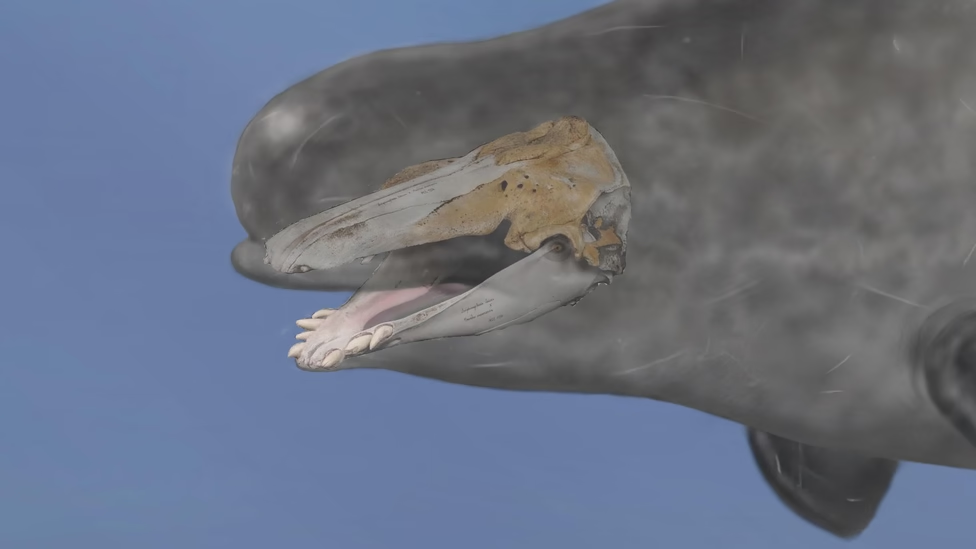
Broader and flatter teeth that harbour porpoise have. This shape resembles shovel and is good for grasping and holding onto slippery prey, like fish.

This type of teeth are pointed, sharp and in a shape of a cone. Dolphins have teeth like this. This shape helps them grip and tear into their prey more effectively, as they often hunt larger or more agile fish.

A type of surfacing behaviour where a whale is upright with its head coming out of water and then sinking gently back to water without splashing. It is used by animals to survey the environment around them.

Physical characteristics that indicate the sex of the organism but are not directly related to reproductive system. They are developed later in life when organism reaches sexual maturity. Secondary sexual characteristics usually have a role in securing a mate and reproduction. Some examples are antlers in stags, peacocks’ long tail, tusk in narwhals, or hood of the hooded seals.

A form of social behaviour of cetaceans where an animal lifts its tail fluke above the water and brings it down with force. The result is a big splash. They display this behaviour in order to call attention to other individuals.

A geographical variation. Population that belongs to a species but is genetically distinct from the rest of the population. Ecotypes are adapted to a specific environmental condition and often look different from rest of the population.

A species that can be found almost anywhere on the Earth.

Single-pointed tooth adapted for tearing or piercing food. They are positioned next to, or behind the front teeth.

Behaviour where a whale launches most or all of its body out of the water.

Behaviour where toothed whales swim at the front of a moving boat, or even a large whale, riding the pressure waves created by its bow. By positioning themselves correctly, they can be propelled forward with little effort, often leaping and surfing along the boat’s wake.

Type of fishing gear. A wall of nett that hangs in the water column. It is made so that fishes head can pass through the mesh size but not their body, so their gills get stuck in the net.

A fishing method that uses long main line with baited hooks evenly spaced and attached to the main line by short branch lines.

Also known as divers’ disease or bends. It happens when a person or animal ascend to surface too quickly. Because of the sudden changes in pressure, the dissolved nitrogen in the blood gets released in the form of bubbles in the bloodstream and tissues and can cause different symptoms, such as fatigue, dizziness, neurological disturbances, pains…

Any form of water, liquid or frozen, that forms in the atmosphere and falls back to the earth.

Process in which animal becomes trapped in human-made objects, including marine debris, abandoned (ghost) fishing gear, and active fishing equipment.

Branch of science that deals with identification, classification, and naming extant (currently living) and extinct (no longer living, fossils) organisms based on shared characteristics. The current way of naming species was developed by Carl Linnaeus and it is called binominal (binary) nomenclature. According to it, each name species consists of two names, the first is the name of the genus to which species belongs to and the second name distinguishes the species withing the genus.

Everything that surrounds someone or something, natural world, or human made. The conditions that surround a person, animal, or a plant and that influence their growth, health, and all natural processes (Encyclopædia Britannica).

The United Nations is an international organization founded in 1945 with the intended purpose of maintaining international peace and security, developing friendly relations among nations, achieving international cooperation, and serving as a centre for coordinating the actions of member nations. Currently made up of 193 Member States.

Research method used to track the movements and behaviours of animals, particularly those in marine or remote environments. This technique involves attaching a tag equipped with a satellite transmitter to the animal. As the animal moves, the tag sends data via satellite, which researchers can then analyse to gain insights into migration patterns, habitat use, and environmental interactions.

Harmful material in the environment. A substance that makes the land, water, air and other media dirty, and not safe and suitable for use.

Social groups of marine mammals that share strong bonds. These groups have established hierarchy, and usually consist of family members.

NASS are internationally coordinated cetacean surveys conducted in 1987, 1989, 1995, 2001, 2007, 2015, and 2024. These surveys are among the most extensive wildlife assessments, with primary objective to obtain quantitative data on the distribution and abundance of all cetacean species across the survey area, spanning the northern North Atlantic from Norway to North America.

MINTAG Project is funded by NAMMCO and Fisheries Agency Japan. The main goal of the project is to develop a new satellite tracking tool that can generate data crucial to improving the management and conservation of lesser-known whale species, such as fin, minge, sei, and Bryde’s whales.

Feeding method of baleen whales where a whale rushes towards their prey with their mouth open and catches the prey in one go.

A learned, cooperative feeding strategy that involves a group of whales. Humpback whales and Bryde’s whales use this strategy. A whales circle a school of small fish or swarms of krill they are hunting and start blowing bubbles. The fish are unable to escape this “net” of bubbles and stay trapped. Then whales swim with their mouths open through the trapped fish, and effectively feed themselves.

A long tooth that animals such elephants, walruses, and narwhals have.

Also known as “earless” seals, true seals belong to a group of pinnipeds that have ear holes, but lack an external ear flap. While sea lions belong to the group of pinnipeds, they are not true seals because they have ear flaps. Grey seals instead, are true seals.

Step in a food chain or an ecosystem. The organisms of a chain are classified into these levels on the basis of their feeding behaviour (Encyclopædia Britannica).

A large net with the form of a cone that is dragged along the sea bottom to gather fish or other marine life.

Triangular ending of a whales’ tail. Unique to every whale, similar to fingerprints in humans. Tail flukes are often used for identifying individuals.

A food system that delivers food security and nutrition for all.

Feeding method of baleen whales where whale slowly swims near the surface with its mouth open, filtering the prey as it moves forward.

A phenomenon that occurs when marine mammals are found dead in the beach or the water or injured but alive close to shore and cannot return to the water, individually or in groups.

Mouth of a squid and beginning of a digestive system. Hard, indigestible material that is left in stomachs of whales that prey on squids. Beaks remaining in stomachs of sperm whales is one of the proofs of existence of colossal squid.

A liquid substance at body temperature, and waxy solid on lower temperatures, found in the heads of sperm and bottlenose whales. Humans used this substance in cosmetics, wax candles, ointments, textile finishing, and as industrial lubricant (Encyclopædia Britannica).

A visual representation of a sound. It shows frequencies that make a sound and how they change over time. When used in audio context, it is also called sonograph, voiceprint, or voicegram.

A large net deployed in a way that encircles an entire area, creating a wall of netting.

Also known as flipper. A fin located in the side of a marine mammal.

The natural process in which an animal loses its feathers, skin, or hair at a particular time of year so that new feathers, skin, or hair can grow.

Plastic fragments smaller than 5 mm in length (according to NOAA and European Chemicals Agency) that are present as a consequence of the plastic pollution. There are two types: primary and secondary. Primary microplastics are microbeads, plastic pellets, and plastic fibres used in personal care products, as a raw material, or in clothing. Secondary microplastics is a product of larger plastic breakdown from exposure to elements and time.

A chemical compound formed by one carbon atom bonded to four hydrogen atoms. It is the main compound of natural gas and one of the most potent greenhouse gases.

A traditional food in Inuit, Chukchi and Nenets cuisine consisting of sliced whale skin with blubber.

Any human-made object that ends up in the marine environment such as straws, soda bottles, plastic grocery bags, etc.

A cave-like place where a wild animal lives. Ringed seals use snow lairs as shelters from the extreme cold temperatures and harsh weather conditions, as well as for giving birth and nursing their pups.

Created in 1946, the IWC is a worldwide body responsible for the management of whaling and conservation of whales formed by 88 member countries

Established in 1948, IUCN is the world’s largest environmental network, composed by over 1,400 member organisations, including governments and civil society. Its mission is to conserve the integrity and diversity of nature and to ensure that any use of natural resources is equitable and ecologically sustainable.

Whaling conducted by native communities for subsistence, cultural practises, and traditional purposes. This type of hunt is generally well regulated to ensure sustainability and respect for cultural heritage.

A behaviour that pinnipeds have when they temporarily leave the water for reproducing or resting, among other things.

A barbed spear used to kill whales, tuna, swordfish, and other large sea creatures, formerly thrown by hand but now, in the case of whales, shot from specially constructed guns (Encyclopædia Britannica).

Gases present in Earth’s atmosphere that trap heat by allowing sunlight to pass through but preventing the heat from escaping back into space. The primary greenhouse gases include water vapor, carbon dioxide, methane, ozone, nitrous oxide, and chlorofluorocarbons.

Fishing equipment that has been lost, abandoned, or discarded in the ocean. This gear continues to float or drift in the water, often being carried by currents and winds, without being actively controlled or used, and posing serious threats to marine life and their habitats.

A biological sonar used by toothed whales to determine the location of objects using sound. The echolocation is used for orientation in the space, for hunting, and in social interactions. Toothed whales have a special organ in the front of their head—melon—made of fatty tissue that acts as a sound lens.

Also known as cuttlefish bone. Thick, internal, calcified shell that helps cuttlefish regulate buoyancy.

A concept that refers to the narrow focus on decreasing carbon dioxide emissions when addressing climate change, overlooking the broader spectrum of sustainable measures needed to tackle climate change.

A chemical compound formed by carbon and oxygen, which is one of the most important greenhouse gases.

A young, baby, whale, dolphin or harbour porpoise.

CAFF is the Biodiversity Working Group of the Arctic Council. The main goal of the Working Group is the conservation of the Arctic’s biodiversity and the sustainable management of its living resources. CAFF works to address the challenges facing Arctic ecosystems, including climate change, habitat loss, and the impacts of human activities.

Increase in concentration of chemical substance with increasing trophic level of organism in the food web (Drouillard 2008).

The gradual build-up of a chemical substance over time in a living organism, either because it is taken up faster than it can be used or because the chemical cannot be used by the organism. Bioaccumulation can be dangerous if the accumulated chemical is toxic.

A marine crustacean, that lives very often encrusted attached to a hard substrate such as a rock, shell, ship or whale.

The basic particle of chemical elements. Consists of nucleus with protons and neutrons and surrounded by electron swarm.

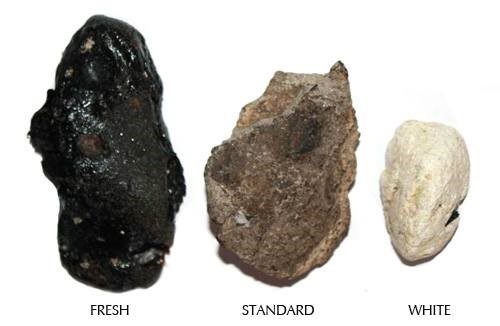
Also known as grey amber. Solid, waxy substance produced in the sperm whale intestines. Fresh ambergris is black, soft, and has unpleasant smell, while exposing to sun causes it to harden, become light grey or yellow, and get pleasant smell it is recognised for. In sperm whales, it is assumed to protect intestines from irritation caused by undigestible objects like squid beak or cuttlebone. In Eastern cultures it is used in medicine, potions, and as a spice, while in the Western cultures it has use as a perfume stabiliser (Encyclopædia Britannica).
The fraction of light that gets reflected by a surface. Bright materials have a higher albedo (i.e., capacity to reflect light) than darker materials. In this context, snow or ice have a higher albedo than trees.

Smooth circles on the surface of water left by the movement of the tail fluke underwater. These fluke prints are useful in hunting, to follow the whale under the surface of the water as well as to determine the size of the whale.

Keratin-based structure, like hair, fingernails, and hooves, forming parallel plates that hang from the upper jaw in a comb-like structure. This structure plays the most important role in feeding process.

A thin flat part that sticks out from the body of a cetacean and is used in moving or guiding the animal through water (Encyclopædia Britannica).

A form of camouflage utilised by animals, where their coloration is darker on the upper side of the body and lighter on the underside. This adaptation helps them blend into their environment by reducing the contrast between their body and the surrounding light conditions, making it more challenging for predators or prey to spot them.

A gathering or concentration of individuals of a species in a particular area for the purpose of feeding.

The fin located in the back of marine mammals.

Accordion-like folds of skin that on the underside of the whale, from their jaw, all the way down to its stomach. These folds have the role of allowing the whale to engulf massive amount of water at once, and effectively entrapping large amounts of their food (krill and small fish).

Odontoceti. Group of cetaceans that include all whales with teeth, as well as dolphins and porpoises. Apart from teeth, they differ from baleen whales for their ability to echolocate. There are 73 species of toothed whales recognised, of which 14 reside in NAMMCO management area.

An offspring resulting from the crossbreeding of two different species.
A powerful burst of air, expelled from a whales blowhole, which creates a spray-like blow around the whale’s head. A whale’s spout can be used to recognise a whale species from afar. This is because each species, with their characteristic size and blowhole type, will have a different spout.

Any of a group of 34 species of aquatic fin-footed mammals comprising seals, sea lions, and the walrus (Encyclopædia Britannica). Seven pinniped species are permanent residents in the NAMMCO management area.

Any cetacean possessing unique modifications of the mouth called baleen, which is used to filter food from water (Encyclopædia Britannica). There are 6 species of baleen whales in NAMMCO management area.

Largest group of baleen whales characterised by the accordion-like folds of skin on their belly side (ventral pleats) that stretch when animal feeds by intaking large amount of water at once.

The behaviour in which animals travel from one habitat to another habitat to cover different needs, such as finding better environmental conditions, search food or reproducing.


